What Not To Eat In Mexico As A Tourist?
A practical, non-alarmist guide to the foods tourists are usually advised to skip in Mexico, how to judge a street stand, and why a guided food walk removes most of the guesswork in Playa del Carmen.
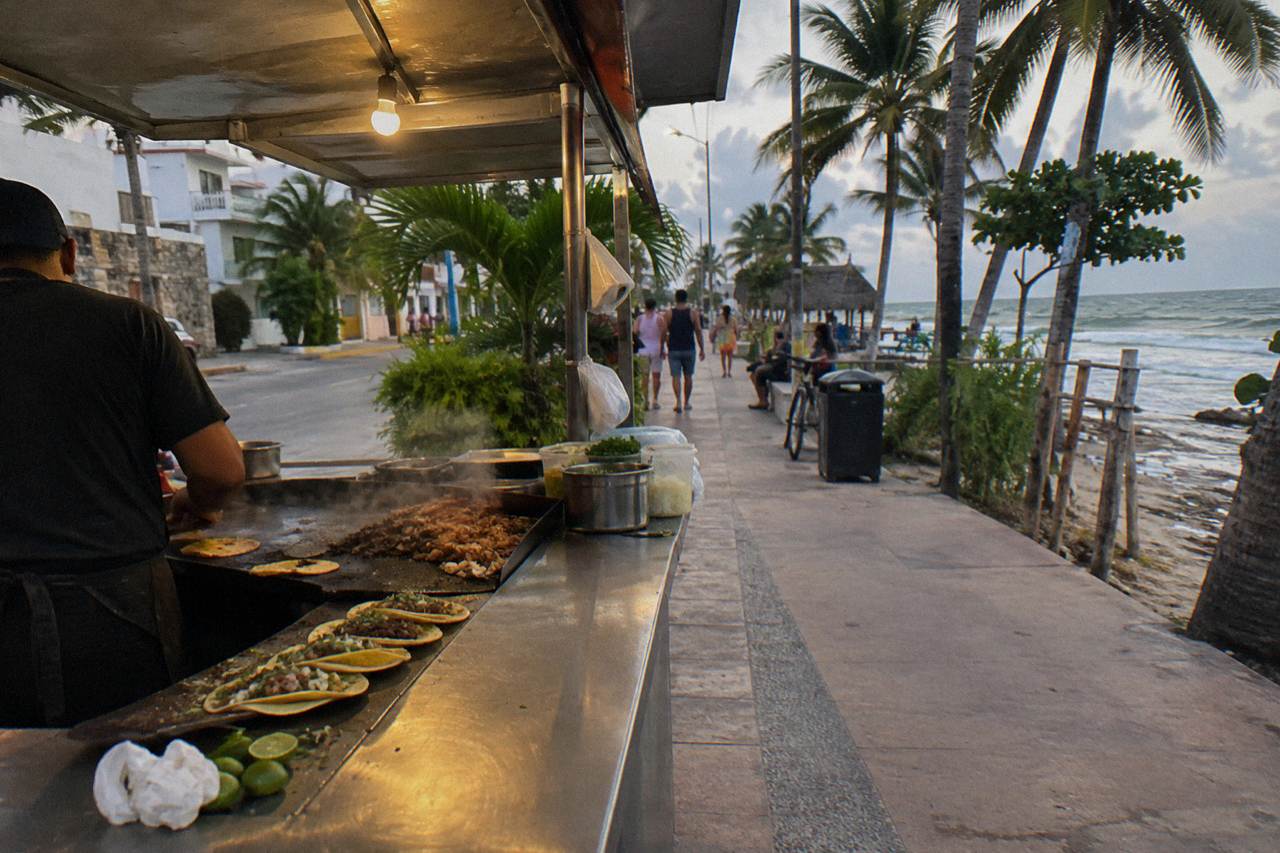
Mexican street food has an unwarranted reputation problem. The same travelers who happily eat reheated airport sandwiches at home will walk past a trompo of spinning al pastor because a stranger on a forum told them to avoid tacos in Mexico. The reality is more boring and more useful: a short list of foods genuinely worth skipping, a slightly longer list of myths, and a set of simple cues that separate a busy local stand from one that should not get your money. Traditional Mexican cuisine was added to UNESCO's Representative List of the Intangible Cultural Heritage of Humanity in 2010, one of the few national kitchens with that status, and most of it is cooked fresh in front of you, which is exactly why it is often safer than the hotel buffet. When you are ready to put that judgment to work, the street-by-street guide to Playa del Carmen's famous pedestrian avenue points you toward the stands, bars and shops actually worth stopping for.
This page works through the question the way a cautious first-time visitor would: what to actually skip, how to read a street stand, what the deal is with water and ice, and how a guided walk removes nearly all of the guesswork on day one. The examples are drawn from Playa del Carmen, where the lineup of guided options is deep enough that you never have to gamble on an empty stomach. If you want that same practical approach applied to the rest of your trip, the Playa del Carmen safety guide for food lovers covers walking at night, getting around, and what hurricane season means for your plans.
The honest shortlist of foods to skip is small: raw unwashed produce from uncertain sources, room-temperature seafood and ceviche that has sat out, unpasteurized dairy from unrefrigerated stalls, and anything reheated repeatedly instead of cooked to order. Everything else, including tacos from a busy street cart, is generally prepared fresh in front of you and is what locals eat daily without incident.
The internet's version of this question is usually a list of ten forbidden foods followed by a paragraph that admits most of them are fine. That order is backwards. Almost no dish in Mexican cuisine is inherently unsafe, because the cuisine itself is built on high-heat cooking, citrus, and quick turnover. What creates risk is not the recipe but the handling: how long the food sat, at what temperature, and whether the ingredients were washed in clean water. A cochinita pibil taco, the Yucatec Maya slow-roasted pork marinated in citrus and achiote, is pit-roasted and held hot, which is about as hostile an environment for bacteria as a kitchen can produce. The danger at a bad stand is rarely the cochinita, it is the salsa ladle that has been sitting in the sun since morning.
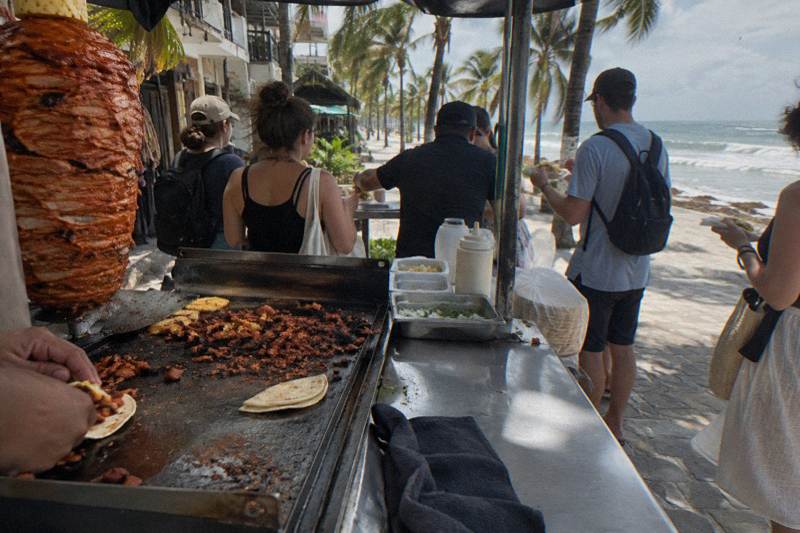
That is why the useful question is never "which dish" but "which stall." A stand with a queue of locals, steam coming off the grill, and a cook who is actively working is doing more for your safety than any list of banned foods ever will. High volume means ingredients are used the same day they were bought. Fresh cooking means high heat. Locals in line means the stand has a reputation to protect in its own neighborhood.
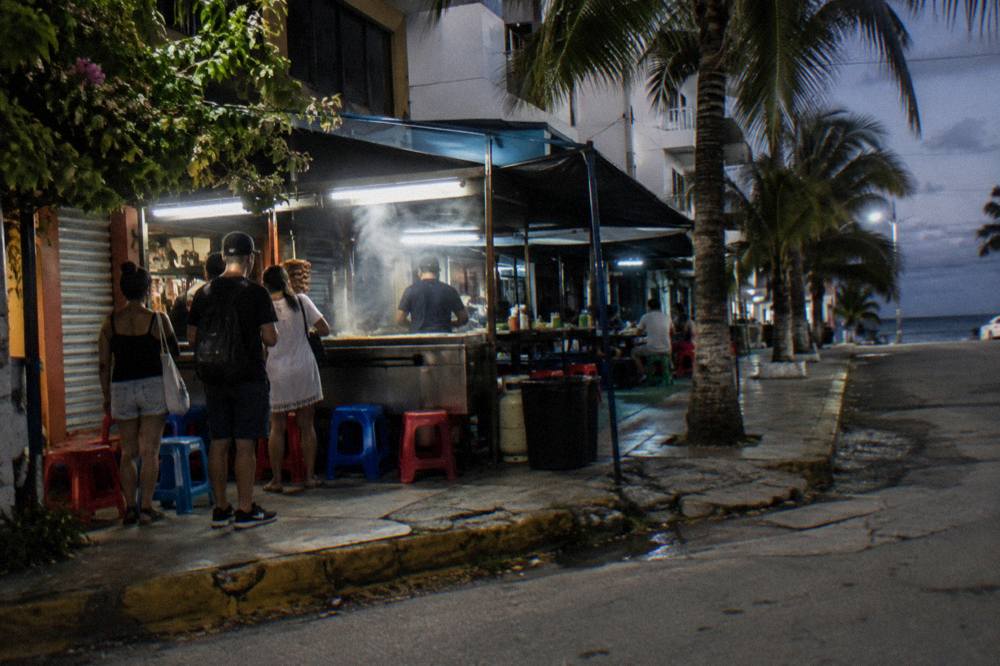
The worry is also the reason many travelers book a guided tasting on their first day rather than their last. A guide walks you into stands that have already been vetted by repeat business, explains what each salsa contains before you commit, and tells you which local snack pairs with which caution. That is precisely the job of a walking food tour, and in Playa del Carmen it is a well-populated category.
Is Street Food In Mexico Safe To Eat?
For most travelers, yes, street food in Mexico is safe to eat when you apply three filters: a long queue of locals, food cooked to order at high heat, and visible turnover of ingredients. The stands that fail those filters are the ones worth walking past, and a guide or a crowded line will identify them faster than any app review.
The math behind street-food safety is unglamorous. A grill that never stops serving does not give food time to cool into the temperature range where bacteria multiply. Salsas made fresh each morning with chile, lime, and salt are naturally inhospitable environments. Tortillas pressed and cooked in front of you have a dwell time measured in minutes. Compare that with a hotel buffet where trays sit under heat lamps for hours and nobody knows when they were loaded, and the street cart starts to look like the conservative choice.
Local food guides point to stands like El Fogón on Avenida 30 and Taquería Honorio near Calle 8 as places where locals line up, which is the pattern to copy: choose by crowd, not by signage. When a stand in Playa del Carmen sells al pastor all night and runs out by late evening, nothing on the counter is old. Sunday-morning cochinita pibil stands near the colectivo terminal reportedly sell out by noon, which is the same principle in breakfast form.
None of this is a promise. Queues, closures, and hours vary, and no guide or article can guarantee an outcome for any individual stomach. What a cautious approach buys you is better odds plus better food, because the busiest stands are usually also the best ones. For a deeper map of the local side of the dining scene, the piece on where locals eat in Playa del Carmen covers the neighborhoods away from the tourist strip.
Which Foods Are Tourists Usually Advised To Skip?
The commonly advised skip list is short: washed-but-uncooked lettuce and leafy salads at stands with no visible washing setup, ceviche and seafood held at room temperature, dairy that is not refrigerated, peeled fruit sold already cut by unknown handlers, and buffet items sitting lukewarm. Each has a straightforward safer swap that costs you nothing in flavor.
None of these are accusations against Mexican cooking, they are general food-handling rules that apply in any hot climate. The swap column below is the practical part: in almost every case you give up nothing except a plate that was sitting out.
| Commonly skipped | Why it gets flagged | Safer swap that loses nothing |
|---|---|---|
| Pre-cut fruit from a cooler cart | Unknown wash water and handling time | Whole fruit peeled in front of you, or a guided tropical fruit tasting |
| Leafy salads at street stands | Raw produce washed in water of unknown quality | Grilled vegetables, nopalitos, or pickled onions |
| Room-temperature ceviche | Seafood held warm instead of chilled | Ceviche ordered at a busy seafood counter with refrigeration visible |
| Unrefrigerated cream and cheese | Dairy held in the heat | Queso fresco kept iced, or skip the dairy at that stand |
| Buffet trays under heat lamps | Long dwell time, unknown reload schedule | Anything cooked to order off the plancha |
The pre-cut fruit row deserves a nuance. A fruit cup with chile and lime is one of the great cheap snacks in Mexico, and plenty of vendors handle it perfectly well. The cue is the wash station: if the cart has running water or a cooler the vendor visibly refreshes, the melon is very likely fine. If the fruit is swimming in a bucket of water that has been sitting since morning, buy a whole mango and a pocket knife instead, or take a guided tasting where someone else has already made that call. A guided tasting of more than 15 tropical fruits runs from $22 per person in Playa del Carmen, food included, with free cancellation, and the guide does the vendor-vetting for you.
Ceviche gets over-flagged too. A busy seafood restaurant with a refrigerated display and high volume serves fish that was iced that morning. The risk case is pre-made ceviche sitting in a warm case at a low-turnover shop, where the citrus "cooks" the outside while the inside lingers in the danger zone. Order it where you can see the cold chain and where the staff are not startled to see a customer.
How Do You Spot A Trustworthy Taco Stand?
Look for five signals together: a line of locals at peak hours, a cook actively grilling or shaving meat, high ingredient turnover, a busy salsa station being replenished, and clean hands or gloves plus a separate hand for money. Any three of the five is a green light; a stand with none of them is the one actually worth skipping.
The money-handling detail matters more than most travelers realize. The best stands have one person who touches cash and another who touches food, or a glove that comes off between the register and the tortilla. It sounds fussy until you have watched a vendor make change, grab a handful of cilantro, and hand you a taco in one continuous motion. Busy stands adopt the two-person split naturally because volume forces it.
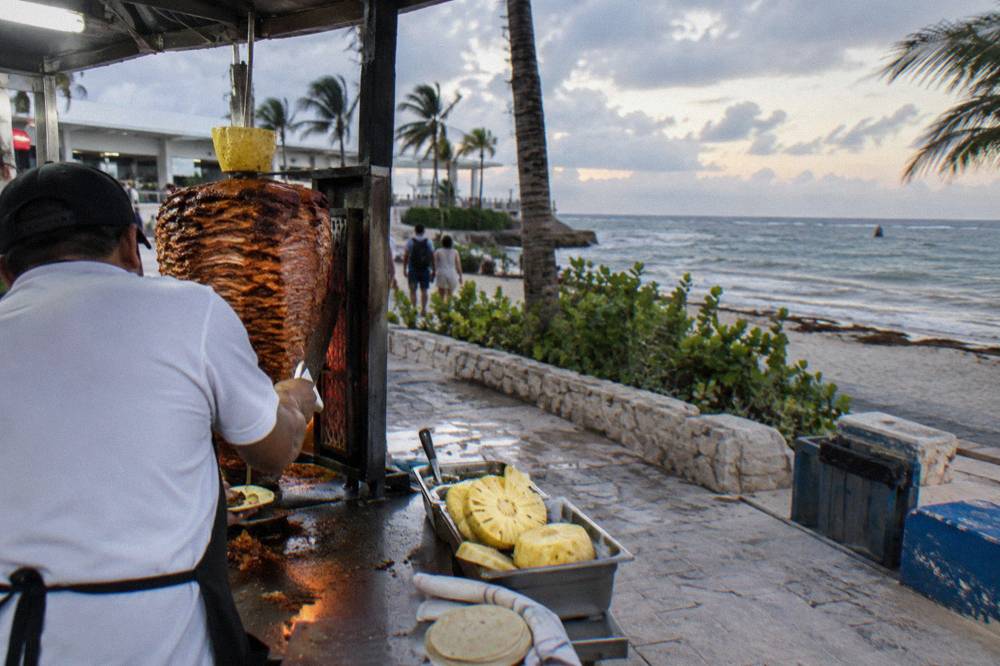
Turnover is the second big tell. When a taqueria goes through a full trompo of al pastor in an evening, nothing on it has been spinning since lunch. When the salsa bowls look crusted at the edges and the limes are brown, the stand is not busy enough to be self-cleaning. None of this requires fluency in Spanish, just thirty seconds of standing back and watching before you order, which is exactly the thirty seconds most nervous travelers skip.
A guide compresses that learning curve. The Eating With Carmen Walking Tour, rated 4.9 across 1,369 reviews, runs about 3 hours along Quinta Avenida from $77.51, food and drinks included, with free cancellation and a group maximum of 24, and its whole premise is delivering you to stands that already passed the crowd test. Similarly, the Rockstarcrawls Street Food Crawl, rated 4.8 across 125 reviews, from $69.99 per person for about 3 hours, moves a group of no more than 20 through vetted street spots with drinks included.
Why Do Tap Water And Ice Deserve Caution?
Tap water in many parts of Mexico, including Playa del Carmen, is not considered safe to drink without treatment, and the standard advice is bottled or filtered water for drinking and brushing teeth. Ice, by contrast, is usually fine, because reputable bars and restaurants use purified ice from bagged commercial suppliers, recognizable by its hollow, cylindrical shape.
The ice point is where most caution lists lose credibility with experienced travelers. Hollow cylindrical ice, the kind with a hole through the middle, does not form in a home tray; it comes from commercial ice machines running on purified water. A bar serving that ice is buying it bagged, the same as a bar in Chicago or Madrid. Flat, cloudy, square cubes at a bare-bones roadside stand are a different story, and that is the cue to order a bottled drink without ice instead. Skeptical readers can trace the underlying drinking-age and beverage rules at the legal drinking age reference, which also confirms the national minimum of 18 with ID required.
The water habit is easier: keep a sealed bottle in the room, use it for brushing, and stop worrying. Travelers who want a deeper look at the town itself can start with the overview of Playa del Carmen, whose tourism industry grew from the passenger ferry crossing to Cozumel into a city counted at 304,942 residents in the 2020 census, served today by both ferry docks and a Tren Maya station.
One related caution that belongs in the same breath: raw vegetables at unvetted stands fall under the same water question, since lettuce and herbs are rinsed in whatever water the stand uses. Cooked vegetables carry none of that concern. When in doubt at a street stand, order the grilled, pickled, or fried version of anything and you have routed around the water issue entirely.
How Does A Guided Food Walk Lower The Guesswork?
A guided food walk replaces dozens of small risk judgments with one decision made in advance, because the guide has already filtered stands by turnover, hygiene, and repeat business. On day one of a trip that matters most, since your stomach has not yet adjusted and you have no local landmarks for which vendor to trust.
There is a reason food-safety worry is the single most common trigger for booking a guided tasting rather than exploring solo. Every cue in this article, the queue test, the money-handling split, the salsa turnover, requires baseline knowledge you do not have on arrival. A guide carries that baseline. When a guide walks a group into a market stand, orders in Spanish, and narrates what is in each salsa, the safety decision has already been made by someone who eats there weekly.
The budget end of the category makes this affordable enough to be a first-day move rather than a splurge. The 4-Hour Budget Food Crawl in the Ejido district runs from $23.46 per person, food included, with free cancellation and a group cap of 8, and as a newer listing it has no review history yet, so judge it on its route and price rather than stars. At the other end, Secret Food Tours' 8+ dish Yucatan walk is rated 5.0 across 44 reviews, from $81.00 per person for about 3 hours, with a group maximum of 12.
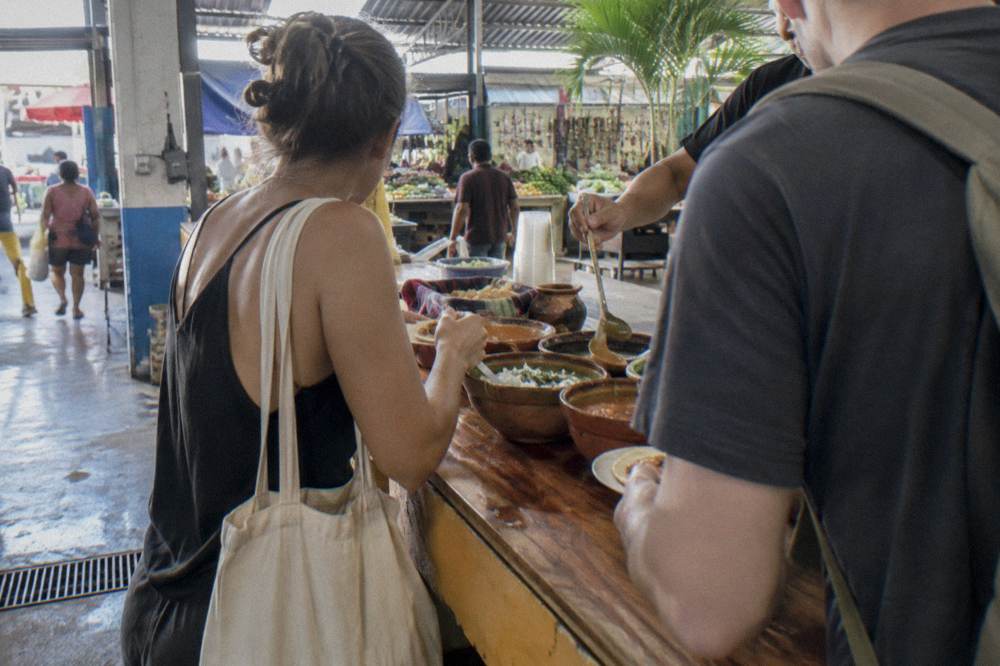
Guides also handle the questions most travelers are too shy to ask. Which salsa is the habanero one, which dish contains unwashed raw greens, whether the agua fresca is made with purified water, and whether a stand looks off today even if it was fine last week. None of that is a guarantee, operators and conditions vary, but it is a very different posture from standing alone at a counter guessing.
What Should Vegetarians, Vegans, And Allergy Travelers Watch For?
Vegetarians and vegans should watch for hidden lard in beans and refried sides, chicken stock in rice and salsas, and cross-contact on shared grills, none of which appear on any menu. Allergy travelers should never assume a tour or stand can accommodate them, and should message the operator before booking to confirm, since cross-contact on a busy comal is routine.
The lard issue is the big one for vegetarians. Traditional refried beans are often cooked with manteca, and a "veggie" quesadilla can share a grill with chorizo. This is not a failure of the cuisine, it is how the cuisine is built, and the solution is asking rather than assuming. Vegans have a genuinely good option on the guided side: a dedicated vegan Mexican food tour runs about 3 hours from $83.52 per person, rated 4.9 across 45 reviews, with food and drinks included and a group maximum of 10, so every stop has already cleared the hidden-animal-product question.
Allergies are a different category and deserve a firmer warning. A street cook cannot audit a salsa for trace nuts or a marinade for shellfish cross-contact, and a guide is not a medical professional. The only correct move is contacting the operator before booking and stating the allergy explicitly, then deciding with that answer in hand. No article, including this one, can clear a specific kitchen for a specific allergy.
For travelers whose dietary questions are preference rather than medical, the general scene rundown in what food Playa del Carmen is known for maps the regional dishes worth building a trip around, from cochinita pibil to fresh seafood counters along the coast.
The Short Version For Nervous First-Timers
Skip room-temperature seafood, unrefrigerated dairy, old buffets, and produce you cannot vouch for. Do not skip street tacos, busy markets, or fresh fruit handled in front of you, because those are the freshest-cooked food in town. When unsure, follow the local queue or hand the decision to a guide on day one.
Playa del Carmen makes the guided route especially easy because the walkable core concentrates so many options. Quinta Avenida is the main tourist street, and the parallel avenues inland hold the taquerias locals actually use. A first evening on a guided crawl teaches you the geography and the safety cues at the same time, and the rest of the week you apply them yourself. Once you know the layout, our guide to whether Quinta Avenida lives up to the hype helps you decide how much time to give the main strip.
This site exists for exactly that reader, and Playa Del Carmen Food Tours keeps a full set of tasting walks, taco tours, and cooking classes, each with price, duration, and group size on its booking page. Whichever way you eat, the goal is the same: spend your caution on the small list of genuinely risky handling practices, and none of it on the cuisine itself.
Common Questions About What Not To Eat In Mexico
What Not To Eat In Mexico As A Tourist?
Skip room-temperature seafood and ceviche, unrefrigerated dairy, pre-cut fruit from stands with no visible wash setup, and lukewarm buffet trays. Do not skip street tacos from busy stands, since those are cooked fresh at high heat all day. Judge stands by local queues and turnover, not by cuisine type.
Can I Eat Salads In Mexico?
Cooked and pickled vegetables are the safe default, since heat and vinegar remove the water-quality question. Raw lettuce and herbs at an unvetted street stand are the one produce item worth skipping, because they are rinsed in whatever water the stand uses. A sit-down restaurant with filtered water can serve salads without issue.
Is Ice In Drinks Safe In Mexico?
Usually yes. Hollow, cylindrical ice comes from commercial machines using purified water and is the standard at reputable bars and restaurants. Flat, cloudy cubes at a roadside stand are the exception, and ordering bottled drinks without ice there is a reasonable habit.
Are Street Tacos Safe For Tourists?
Street tacos from a stand with a line of locals, food cooked to order, and fast ingredient turnover are generally safe and among the freshest food available. The risk pattern is low-volume stands with food sitting at ambient temperature. A guided street food crawl is the simplest way to skip the guesswork on day one.
Should I Brush My Teeth With Tap Water In Playa Del Carmen?
Use bottled or filtered water for drinking and brushing teeth, which is the standard advice across the region. Sealed bottled water is inexpensive and available everywhere. Ice and cooked food are handled differently and should not be lumped in with the tap-water question.
Can A Food Tour Accommodate My Allergy?
Never assume so. Message the operator directly before booking and state the allergy explicitly, since cross-contact on shared grills is routine and guides cannot audit every ingredient. Only book once the operator confirms it can handle your specific restriction.