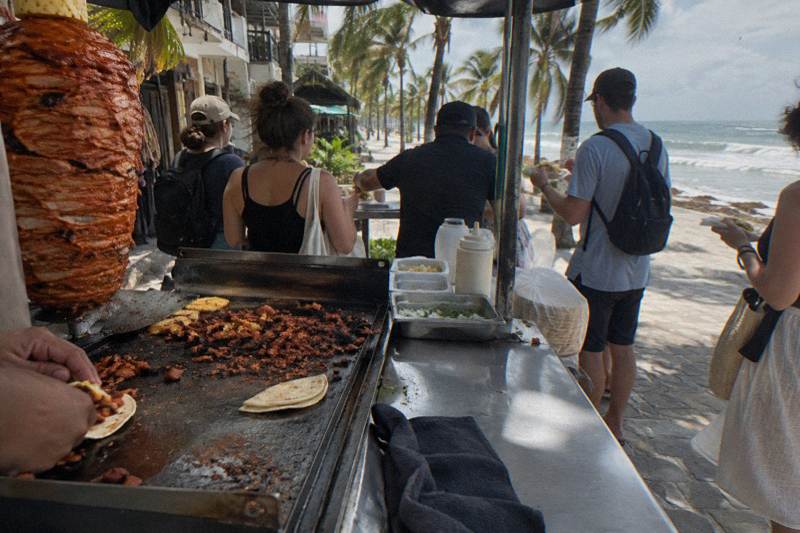
What Food Is Playa Del Carmen Known For?
The dishes Playa del Carmen is actually known for: cochinita pibil, tacos al pastor, fresh Caribbean seafood, and the Yucatecan cooking that earned UNESCO recognition, plus how to taste it all.
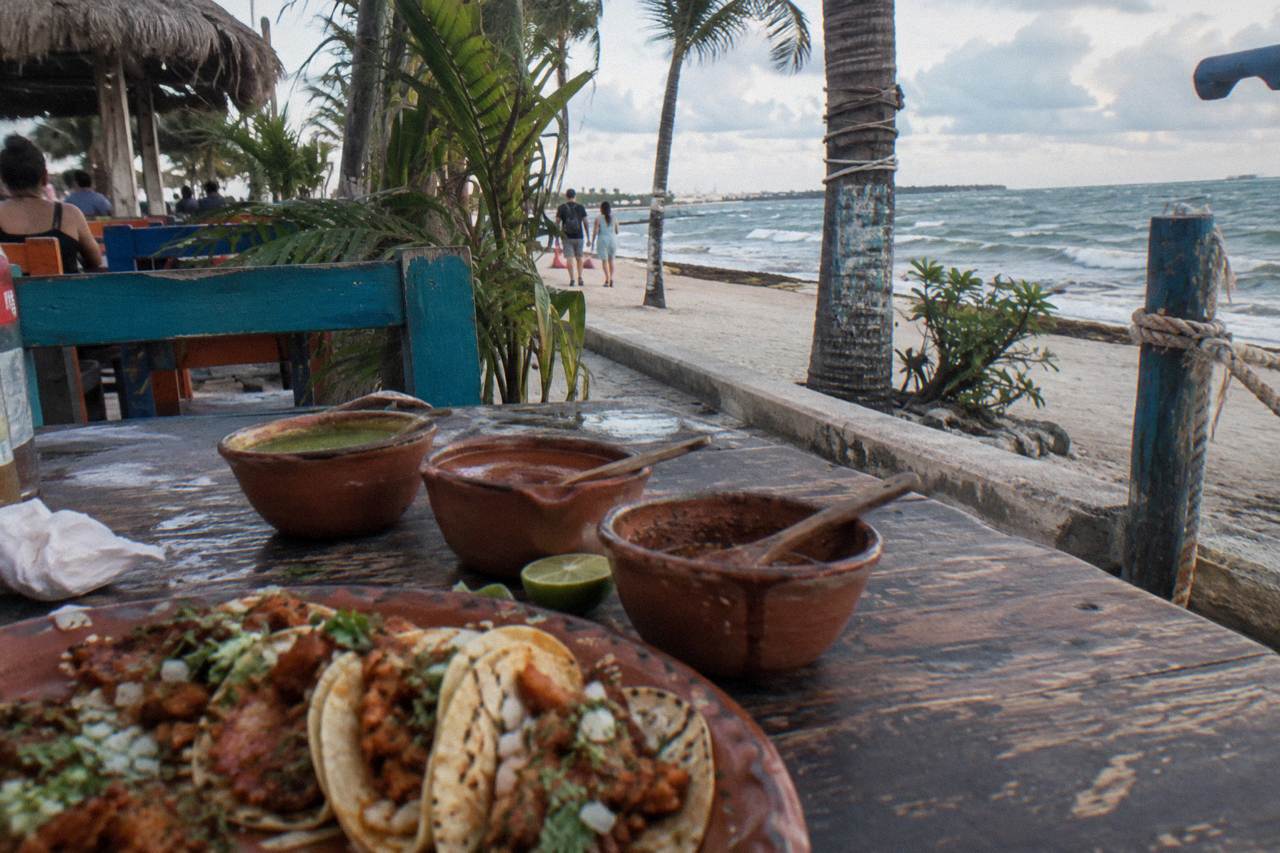
Playa del Carmen answers that question with one word before any other: cochinita pibil. This is the slow-roasted, citrus-and-achiote-marinated pork of the Yucatan, the dish the region builds Sunday mornings around, and it anchors a food identity that also leans on tacos from inland taquerias and seafood pulled from the Caribbean just a few blocks east. Traditional Mexican cuisine joined UNESCO's Intangible Cultural Heritage list in 2010, and in this town that heritage shows up on paper plates, not just in restaurants.
Playa del Carmen is known for Yucatecan cooking, above all cochinita pibil, the pit-roasted pork marinated in sour citrus and achiote that defines the peninsula's cuisine. Around it sit tacos al pastor from trompo spits, fresh Caribbean seafood, handmade corn tortillas, and salsas built on habanero and recado spice pastes. Together these dishes form the town's edible identity, one you can taste across a single afternoon.
The town grew from a ferry village serving Cozumel into a city of 304,942 people at the 2020 census, and its food grew with it. The core of what locals eat has stayed Yucatecan: pork and citrus, corn and squash, the recado spice blends that trace back to Maya kitchens. What surrounds that core is the broader Mexican street-food canon, brought by families from across the country who moved here for work, which is why the taco scene punches far above the town's size. Food is only part of the story, and our guide to what makes Playa del Carmen special covers the walkable layout, the Maya roots, and the cenotes, Cozumel and Tulum all within easy reach.
Quinta Avenida, the pedestrian spine of the tourist district, gives visitors one version of this food: polished, plated, aimed at the beach crowd. Two blocks inland, on Avenida 25 or around the Mercado Municipal, the same ingredients appear at market stalls and loncherias at a fraction of the price. Both are real. The difference matters if your goal is to understand what the town actually eats rather than what it serves tourists.
That gap between the visitor strip and the local table is exactly what a good walking tour closes. The Eating With Carmen Walking Tour, rated 4.9 across 1,369 reviews, runs about 3 hours from the Quinta Avenida area with food and drinks included, from $77.51, and the booking page shows the price basis since it varies with group size. Two other strong options cover the same ground with different emphasis.
If you want the short list of what to order first, the table below is the honest starting point. It sticks to the dishes the town is genuinely known for rather than the ones that photograph well.
| Dish | What it is | Where it fits |
|---|---|---|
| Cochinita pibil | Yucatec Maya slow-roasted pork marinated in acidic citrus and achiote, traditionally pit-cooked | Sunday breakfasts, markets, loncherias |
| Tacos al pastor | Pork carved from a vertical trompo spit with pineapple, not a Yucatecan original but everywhere here | Late-night taquerias |
| Fresh Caribbean seafood | Whole fried fish, ceviche, shrimp and octopus from the coast offshore | Beachside and Centro seafood houses |
| Handmade tortillas | Corn masa pressed and griddled fresh, often in front of you | Markets and home-style kitchens |
| Salsas and recados | Habanero-forward sauces and achiote spice pastes | On every table |
One clarification worth making early: al pastor is not a Yucatecan dish. It belongs to central Mexico's Lebanese-influenced taco tradition, as the broader story of Mexican cuisine records. Playa del Carmen adopted it the way the whole country did, and today some of the busiest trompos in town run until the early morning hours.
Which Yucatecan Dishes Should You Try First?
Start with cochinita pibil, then salbutes, panuchos and sopa de lima, the everyday Yucatecan dishes built on the same citrus-and-corn foundation. Cochinita pibil is the flagship: pork marinated in sour orange juice and achiote, wrapped in banana leaves and roasted slowly, traditionally in an underground pit called a pib.
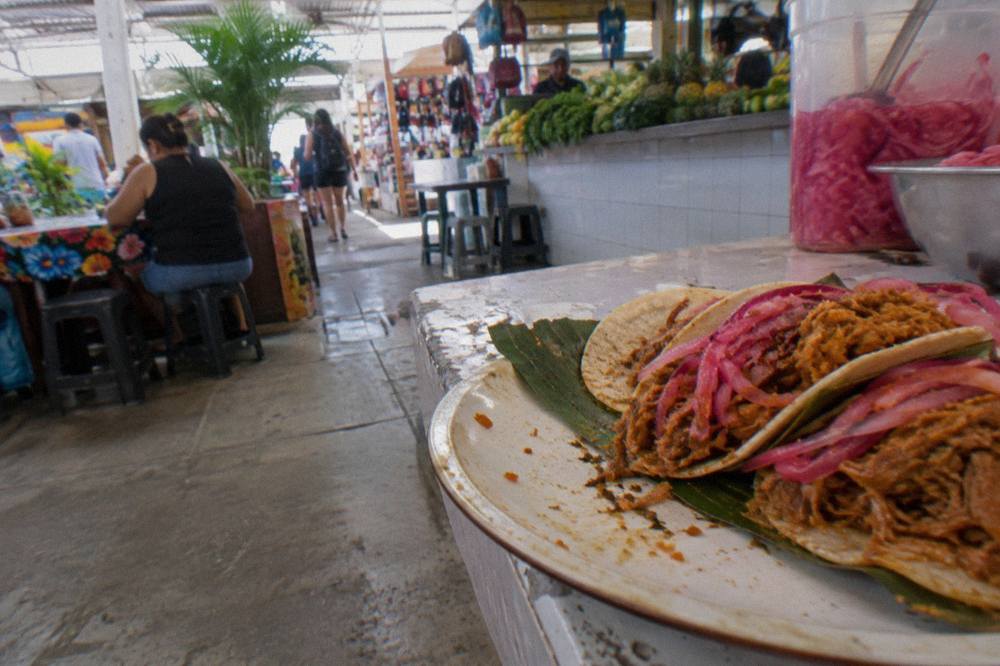
The verified record on cochinita pibil is specific: it is a Yucatec Maya dish from the Yucatan Peninsula, marinated in strongly acidic citrus with annatto, and traditionally roasted in a pit. In Playa del Carmen you will find it at its most authentic in the morning. Local food guides point to the Mercado Municipal on Avenida 25, between Calles 8 and 10, as the most reliable place for daily cochinita tacos, and to Sunday-morning stands near the colectivo terminal on Calle 2 Norte that sell out by midday. Those stands exist because the dish is a weekend ritual here, not a tourist invention.
The supporting cast matters too. Panuchos are tortillas split, stuffed with refried black beans and fried, then topped with turkey or pork and pickled red onion. Salbutes skip the bean layer and puff instead. Both turn up wherever Yucatecan families eat, and both depend entirely on the masa being fresh, which is why they disappoint inland from the tourist strip far less often than on it. Sopa de lima, a chicken broth perfumed with lime and served with crispy tortilla strips, is the region's comfort dish.
Achiote and recado pastes tie all of this together. Recado rojo, the red paste built on annatto seeds, oregano and spices, is what gives cochinita its color and depth; recado negro, a burnt-chile paste, powers darker Yucatecan stews. Home cooks buy these by the kilo at market spice stalls, and any cooking class worth taking in this town will put them in your hands. The 9 Recipes, Bottomless Drinks class from $85 per person, rated 4.9 across 39 reviews, builds its 4-hour session around tortillas from scratch and Yucatecan dishes in that tradition.
Tasting the full Yucatecan spread in one sitting is the appeal of the Secret Food Tours, 8+ Dishes walk, rated 5.0 across 44 reviews, from $81 per person, about 3 hours with a group capped at 12. The dishes listed above appear in some form on nearly every Yucatecan-focused tour in town, which is itself a clue about what the food culture here prizes.
Curious whether a guided walk or a market visit on your own suits you better? The tour above includes free cancellation per the listing, so the commitment is low.
Why Do Tacos Run This Town?
Because tacos are the everyday currency of Mexican eating, and Playa del Carmen inherited the full national repertoire through migration. Al pastor trompos, suadero, cochinita and breakfast barbacoa all run here, with the busiest taquerias clustered inland from Quinta Avenida where rents are lower and locals actually live. The taco is not the town's oldest tradition, but it is its most frequent one, eaten standing up at all hours.
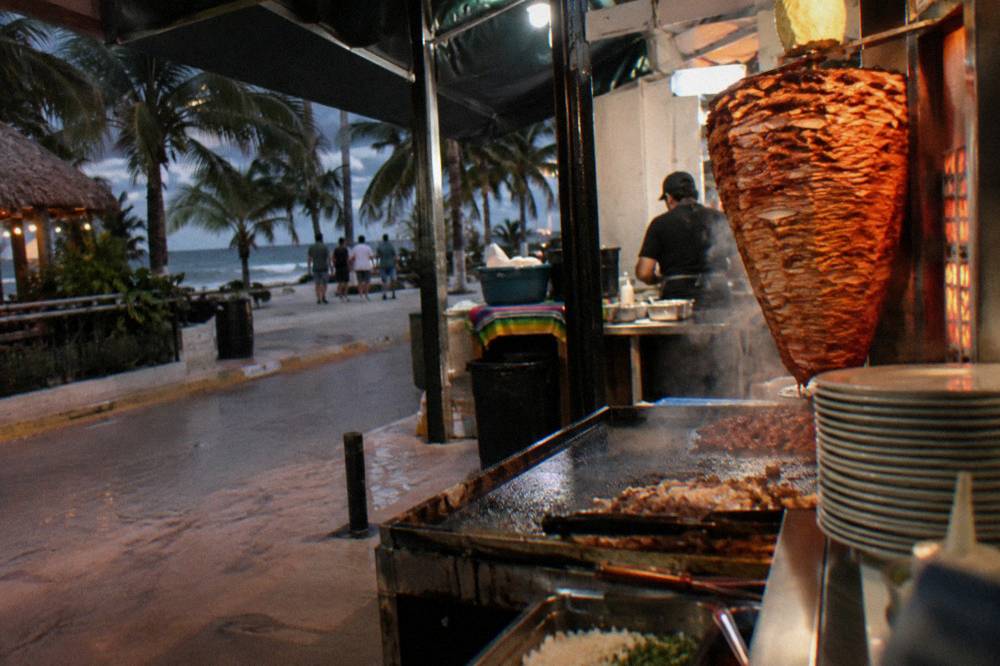
The geography of tacos in Playa del Carmen tells you where to walk. Quinta Avenida has tacos, but they are priced for the beach crowd. Avenida 30 and Avenida 15, one and two blocks inland, hold the trompos that run late; local guides single out El Fogón on Avenida 30 near Calle 10 and Tacos El Primo on Avenida 15 as the standard-bearers, with Taquería Honorio near Calle 8 popular with residents. None of these require a booking, a tour or more Spanish than pointing at the spit.
What surprises many visitors is the timing. Cochinita pibil is morning food; al pastor is evening and late-night food. Order either outside its window and you get the reheated version. The Sunday rhythm is the strongest of all: cochinita stands open early and finish by noon, because the families who buy them cook for the day, not the week.
There is a second rhythm worth learning: the after-beach hour. Around late afternoon, office workers and hospitality staff coming off shifts fill the taquerias closest to the residential blocks, and that is when the freshest batch of a busy stall's day hits the griddle. A stall with a queue of locals at 6 p.m. is doing something right, and the trompo should be visibly turning.
If you would rather have the trompos decoded for you, the Rockstarcrawls Street Food Crawl, about 3 hours from $69.99 per person, rated 4.8 across 125 reviews with food and drinks included, walks the taqueria circuit with a group capped at 20. It pairs naturally with the longer street food tour guide for Playa del Carmen, which breaks down the same scene dish by dish.
Taco literacy here is cheap to acquire. Start with one taco of everything at a busy stall, watch where the locals stand, and treat habanero salsa with respect: a little goes a long way. Salsa bars run the heat range from mild roasted tomato to raw habanero, and the safest method is a small dab on the edge of the taco before committing the whole thing.
What Seafood Does The Caribbean Coast Serve?
Playa del Carmen's seafood identity is Caribbean: whole pescado frito, lime-cured ceviche, aguachile, garlic shrimp and octopus, much of it landed from the waters directly offshore. The ferry that still runs to Cozumel across the channel started this town's tourist economy, and the sea has fed it ever since. Beach clubs plate the upscale version; Centro loncherias and the Mercado Municipal serve the everyday one.
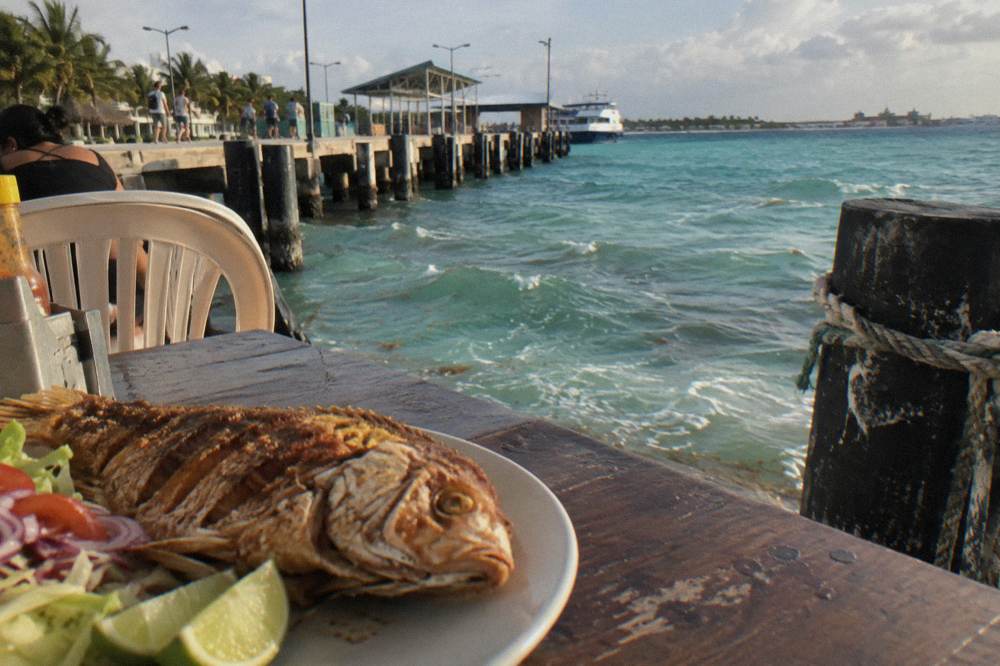
Ceviche deserves its own sentence or two. The coastal style leans on fresh lime, tomato, onion and cilantro, sometimes with a splash of ketchup-style sauce in the tourist belt, sometimes naked and sharp inland. Aguachile, shrimp bathed in a green chile-lime broth, is the sharper cousin. Octopus, abundant on the Mesoamerican reef system, turns up grilled with garlic or in tacos. The rule of thumb is distance from the water: the closer the kitchen to the dock, the shorter the time between net and plate. Everything else covered here is indexed on Playa Del Carmen Food Tours.
For travelers who want seafood and Mexican craft beer paired rather than guessed at, the Beer and Seafood Crawl runs about 3 hours from $101.53 per person, food and drinks included, with a group capped at 10. The dedicated Playa del Carmen seafood and beer tour guide covers the same pairing logic for independent eaters.
The deeper context is that this whole coast eats from one kitchen. Riviera Maya cuisine is Yucatecan technique applied to Caribbean ingredients, which is why a single good meal here can hold pit-roasted pork, reef fish and habanero salsa on the same table. The piece on what makes Riviera Maya cuisine unique unpacks that lineage.
Where Do Locals Actually Eat In Playa Del Carmen?
Locals eat at the Mercado Municipal on Avenida 25, at the Sunday cochinita stands near the colectivo terminal on Calle 2 Norte, and at the inland taquerias on Avenues 15 and 30, not on Quinta Avenida. The market operates daily, and local guides describe complete market breakfasts and set-lunch comidas corridas at prices a fraction of the tourist strip. This is where the town's real food identity lives.
The pattern repeats in every beach town on this coast: the visitor street sells location, the side streets sell food. Playa del Carmen's version is unusually walkable, because Centro's grid means the market sits barely ten minutes on foot from the pedestrian boulevard. A morning spent at the market stalls, then a taco inland after dark, covers the local canon for the price of a single beach-club appetizer elsewhere.
Reported changes on the tourist street itself are worth knowing. None of that touches the market or the taquerias, which serve residents rather than seasonal foot traffic.
For a fuller rundown of resident favorites, see where locals eat in Playa del Carmen. The short version: follow the taxi drivers at breakfast and the families at dinner, and you will rarely go wrong.
Can You Taste All Of This In One Visit?
Yes, and the efficient way is a guided walk that strings Yucatecan dishes, tacos and market stops into a single route, then your own mornings at the mercado for anything the tour skipped. A 3-hour tour with eight or more tastings covers the flagship dishes; two self-guided meals at the market and an inland taqueria fill the gaps. Split it that way and one long weekend is enough to eat the town properly.
The economics favor the guided half for first visits. Tours from $69.99 to $81 per person include the food itself, a guide translating the salsa warnings, and a walking route that would take two days to research alone. The Secret Food Tours, 8+ Dishes option is built exactly around this article's question: rated 5.0 across 44 reviews, about 3 hours, from $81 per person, with a group capped at 12 and free cancellation per the listing.
Budget and dietary angles both have answers too. The 4-Hour Budget Food Crawl from $23.46 per person covers local bites and hidden spots in the Ejido district, while the Vegan Mexican Food Tour, rated 4.9 across 45 reviews from $83.52 per person, proves the cuisine's plant-based half. Dietary restrictions deserve a message to the operator before booking rather than an assumption at the meeting point.
For depth over breadth, a cooking class converts the same ingredients into skill. The Juan More Taco Cooking Class, rated 5.0 across 333 reviews from $103.66 per person, and the Cozumel Chef Cooking Class, rated 4.9 across 41 reviews from $120 per person and meeting in Playa del Carmen, both include food and drinks over about 3 hours. The cooking class versus food tour comparison helps you choose between the two formats.
Timing the eating matters as much as choosing it. Cochinita before noon, seafood at lunch when the catch has moved, trompos after dark: that single rhythm, layered over any of the options above, is how residents eat and how a visitor eats well. Add a market morning and one late taco run, and a long weekend covers the town's table end to end.
However you split your time, the trio below is the fastest way to put the town's signature dishes in front of you in a single afternoon, with free cancellation listed on each.
Common Questions About What Food Playa Del Carmen Is Known For
What Food Is Playa Del Carmen Known For?
Cochinita pibil first: Yucatecan pit-roasted pork marinated in citrus and achiote. Around it, tacos from inland trompos, fresh Caribbean seafood such as ceviche and whole fried fish, handmade corn tortillas and habanero salsas. The town's food identity is Yucatecan at its core, and that heritage was recognized when UNESCO inscribed traditional Mexican cuisine in 2010.
Is Playa Del Carmen Food The Same As Mexican Food Generally?
It overlaps but leans Yucatecan. Expect cochinita pibil, salbutes, panuchos and sopa de lima alongside the national staples like al pastor tacos. The Yucatecan layer, citrus marinades, achiote pastes and pit cooking, is what distinguishes this coast from central or northern Mexican cooking.
Where Is The Best Place To Try Cochinita Pibil?
Local food guides point to the Mercado Municipal on Avenida 25 between Calles 8 and 10 for consistent daily cochinita tacos, and to Sunday-morning stands near the colectivo terminal on Calle 2 Norte that sell out by noon. Several guided walks, including tours focused on Yucatecan dishes, include cochinita among the tastings.
Do I Need A Tour To Eat Well In Playa Del Carmen?
No. The market and inland taquerias are walkable and inexpensive. But a 3-hour guided walk from $69.99 to $81 per person, food included, compresses days of research into one afternoon, and every tour in this article lists free cancellation, so you can adjust plans if your schedule shifts.
Is Street Food In Playa Del Carmen Safe For Tourists?
Busy stalls with high turnover are generally a good bet anywhere in Mexico, and the taquerias near the tourist core serve a constant flow of visitors. Standard caution applies: favor stands cooking in front of you, and if you have an allergy or dietary restriction, message the tour operator before booking rather than assuming it can be handled on the spot.
What Should I Eat In Playa Del Carmen If I Am Vegan Or Vegetarian?
The Yucatecan base of corn, beans, squash and salsas translates well. A dedicated Vegan Mexican Food Tour runs about 3 hours from $83.52 per person, rated 4.9 across 45 reviews, and a veggie-friendly walking tour from $59 per person covers the same ground for mixed groups.