What Is Special About Playa Del Carmen?
Playa del Carmen stands out for walkable size, a food culture rooted in Yucatecan tradition, and a location that puts cenotes, Cozumel and Tulum within easy reach.
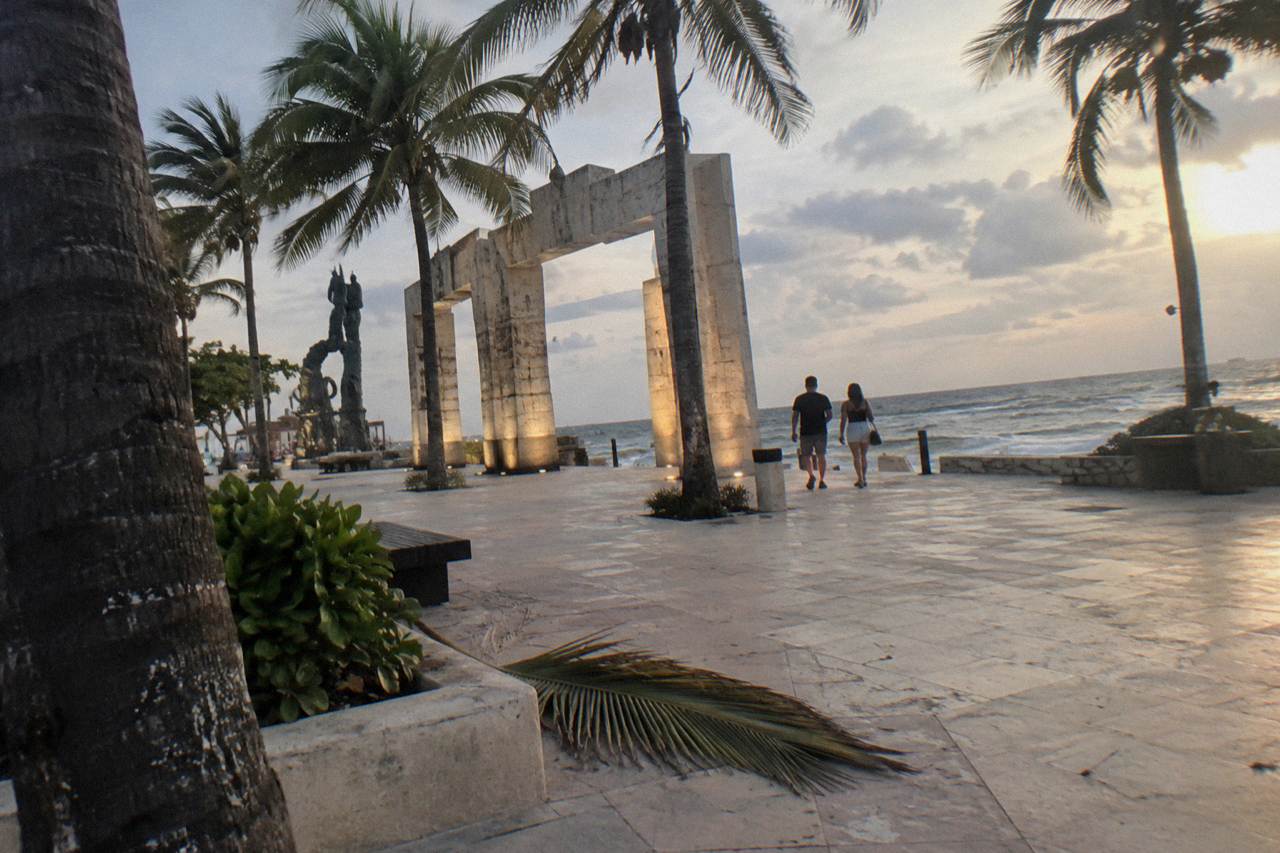
Playa del Carmen is special because it packs a ferry-port history, a Yucatecan food culture, and a genuinely walkable layout into one small town on the Mexican Caribbean coast. The 2020 census counted 304,942 residents, tourism began with the passenger ferry to Cozumel, and the main tourist street is Quinta Avenida, a pedestrian avenue running close to the beach.
That combination is rarer than it sounds. Cancun was built as a planned resort strip, Tulum spread out along a highway, and Cozumel sits on an island across the channel. Playa del Carmen grew around a dock, then around the street that leads inland from it, and the town still behaves like a place you can cross on foot. Visitors notice this within a day: hotel, beach, dinner, and a late taco are usually all within a fifteen minute walk of each other.
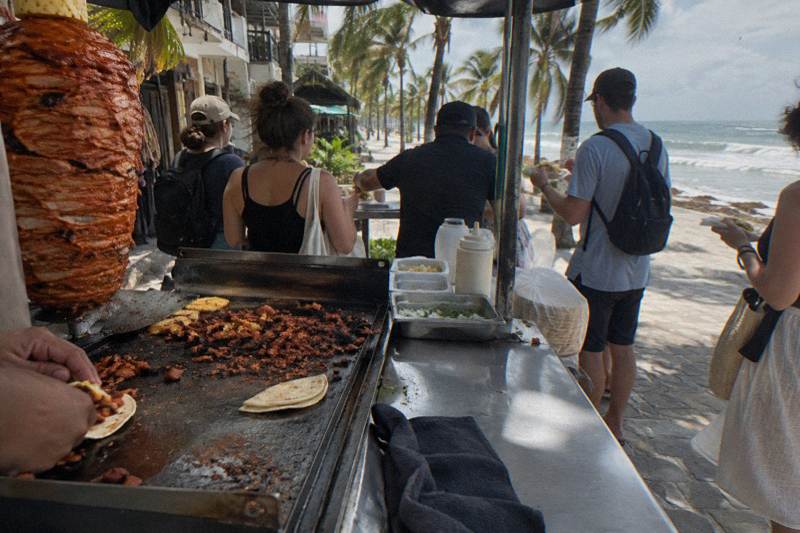
The food is the second half of the answer. This is one of the few coastal towns where cochinita pibil, the Yucatec Maya slow-roasted pork marinated in citrus and achiote and traditionally pit-roasted, shows up on ordinary breakfast counters rather than only on restaurant menus, as described on its Wikipedia page. Traditional Mexican cuisine as a whole was inscribed on UNESCO's Intangible Cultural Heritage list in 2010, per the UNESCO listing, and that living-kitchen culture, market stalls and family recipes included, is part of daily life here rather than a museum piece staged for visitors.
For visitors who want that story translated rather than decoded alone, the Eating With Carmen Walking Tour is the most reviewed option in town, rated 4.9 across 1,369 reviews, running about 3 hours with food and drinks included from $77.51. It is a good example of what makes the town special in miniature: a few blocks, a lot of history, and a guide who knows which doorway hides the good kitchen. The tour caps groups at 24, offers free cancellation per the listing, and works the Quinta Avenida area, which keeps the whole route inside the walkable core.
A Ferry Town That Grew Into The Riviera Maya's Center
Playa del Carmen's special geography is the source of almost everything else: the passenger ferry to Cozumel started the tourist trade, the town sits opposite the island across the Cozumel Channel, and it sits on the rail line and highway corridor that connects Cancun airport to Tulum. It is a natural base rather than a destination at the end of a road.
The town's origin explains its shape. Before mass tourism, Playa del Carmen was a small fishing and ferry settlement serving Cozumel, the island that lies directly offshore; the passenger ferry between San Miguel de Cozumel and Playa del Carmen created the first steady flow of visitors, and the town grew inland from that dock. Population tells the story of the speed: 149,923 residents at the 2010 census, 304,942 by 2020, roughly doubling in a decade. Cozumel itself was designated a Pueblo Magico in 2023, and the island remains the diving and cruise anchor of this stretch of coast, with Playa del Carmen as its mainland doorway.
Today the same position works in a visitor's favor. The Tren Maya, which began operating in December 2023 and runs 1,554 kilometers across the southeast, includes a Playa del Carmen station, per the project's overview. The ferry still crosses to Cozumel, cenotes sit inland, and Tulum is down the coast. Very few towns of this size sit at the intersection of an island, a reef coast, a rail line, and a string of freshwater sinkholes. The practical effect is that a week based here can include a reef, a jungle swim, a colonial-era food tradition, and an island, all without repacking a suitcase.
Why the town stayed walkable
Quinta Avenida, the pedestrian main street, runs parallel to the beach and carries most of the restaurants, bars, and shops that visitors come for. Because the tourist core is long and narrow rather than spread out, most trips happen on foot. The grid of numbered streets makes orientation simple: avenues run from the beach inland, calles cross them, and even first-time visitors stop needing a map within a day or two. The street also does double duty as the town's social center in the evenings, when the heat drops and the avenue fills with diners rather than shoppers.
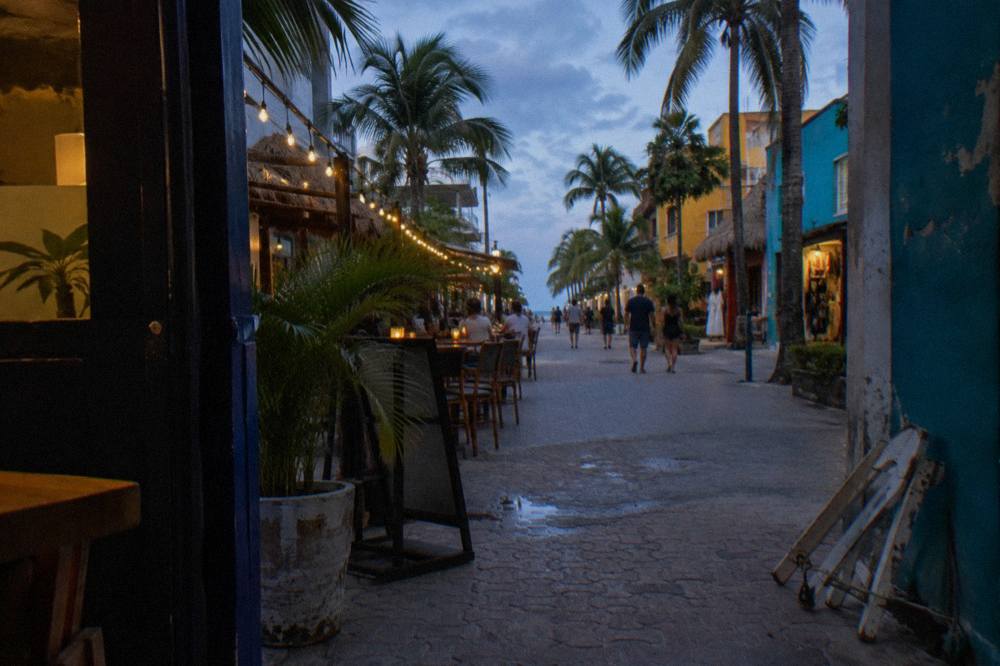
That walkability shapes the food scene too. A walking food tour is the dominant tour format here precisely because the format matches the geography: the Secret Food Tours, 8+ Dishes option covers more than eight Yucatecan tastings in about 3 hours from $81.00 per person, rated 5.0 across 44 reviews, without anyone ever needing a vehicle. Tours that would require a bus in Cancun happen on foot in Playa del Carmen, and the small-group formats, this one caps at 12 guests, turn a street into a classroom.
A Food Culture Rooted In The Yucatan, Not Just The Beach
The special thing about eating in Playa del Carmen is the layering: Yucatec Maya dishes like cochinita pibil sit beside central Mexican street food, Lebanese-influenced al pastor, and contemporary Riviera Maya cooking, all within a few blocks. The town is a genuine crossroads kitchen rather than a single-cuisine resort town.
Start with the Yucatecan base. Cochinita pibil, pork marinated in sour citrus and achiote and traditionally cooked in a pit, is the region's signature dish, and in Playa del Carmen it is breakfast food, not a fine-dining reference point. Markets and loncherias serve it in the morning, and food tours build stops around it. The distinction matters: al pastor, the trompo-shaved pork taco beloved here, is not a Yucatecan dish at all, it arrived with Lebanese-Mexican influence further west, and a good guide will point out which dishes are local to the peninsula and which came with migration. Understanding that split is the fastest way to understand what the Riviera Maya kitchen actually is, a subject covered more fully in the piece on what makes Riviera Maya cuisine unique.
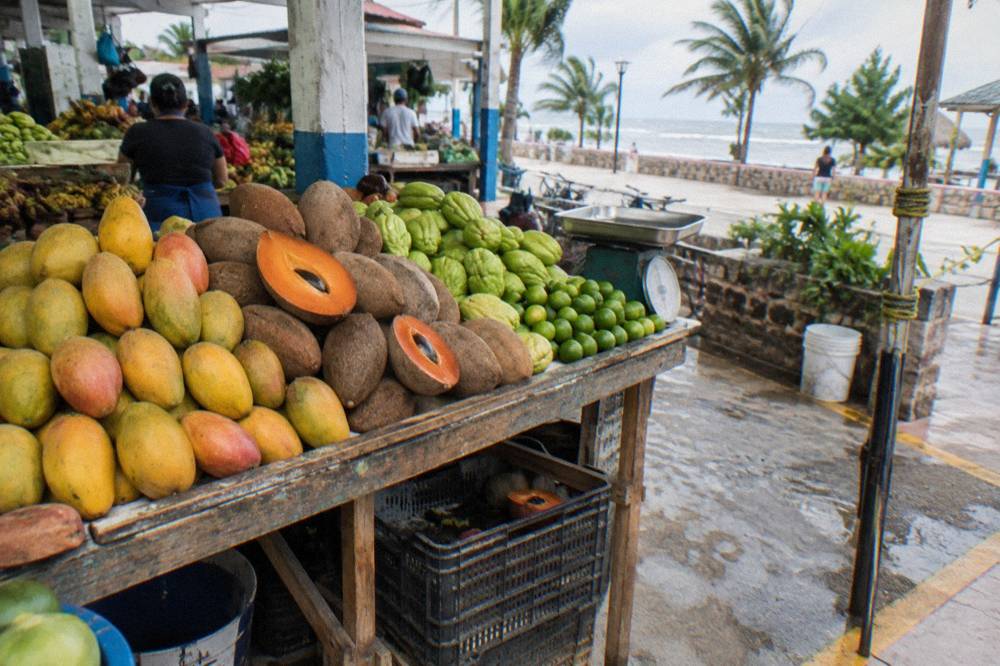
Then there is the market layer. The Mercado Municipal on Avenida 25 is where residents shop for produce and eat comidas corridas, the fixed midday meals that anchor Mexican working life. Local food writers point to it as the most consistent place in town for everyday cochinita pibil tacos. A market-first cooking class builds on the same logic: several classes in the lineup begin with shopping for ingredients before cooking, which means participants learn where the food comes from before learning how to cook it.
The town's kitchen, by format
| Experience | Format | Duration | Price (from) | Reviews |
|---|---|---|---|---|
| Eating With Carmen Walking Tour | Guided walk, Quinta Avenida area | ~3 hours | $77.51 | 4.9 across 1,369 |
| Rockstarcrawls Street Food Crawl | Group crawl, max 20 | ~3 hours | $69.99 per person | 4.8 across 125 |
| Secret Food Tours, 8+ Dishes | Small-group walk, max 12 | ~3 hours | $81.00 per person | 5.0 across 44 |
| Vegan Mexican Food Tour | Guided walk, Centro | ~3 hours | $83.52 per person | 4.9 across 45 |
| Juan More Taco Cooking Class | Hands-on class, Ejido | ~3 hours | $103.66 per person | 5.0 across 333 |
The table shows the range honestly: a taco-cooking class costs more than a walking tour, and the most reviewed options are not the cheapest. The cooking classes justify it with hands-on time and a meal you cooked yourself. The Juan More Taco Cooking Class alone has 333 reviews at a 5.0 rating, which is a serious pool for a class format, and it runs in the Ejido district, a genuinely local neighborhood a short ride from the tourist core. At the other end of the scale, the Cozumel Chef Cooking Class meets in Playa del Carmen despite its decision name, costs from $120.00 per person, and holds a 4.9 rating across 41 reviews, so the name is worth reading twice when comparing.
Small Scale, Warm Weather, And A Predictable Rhythm
Playa del Carmen is special as a base because its climate is dependable and its size is manageable: mean daily highs run from 27.8 C in January to 32.9 C in August, the driest month is March and the wettest October, and the tourist core is compact enough that weather rarely strands you far from shelter.
The numbers come from long-term weather normals for the town, tabulated on its Wikipedia geography entry. In practical terms, winter and early spring are the comfortable, dry, busy months. Summer is hotter and more humid. October is the wettest month at 284.3 millimeters of rain, and the Atlantic hurricane season officially runs June 1 to November 30 according to the US National Hurricane Center, with most activity from mid-August to mid-October. Even the wettest month averages under sixteen rainy days, so a rainy-season trip is rarely a washout, just a plan with more flexibility built in.
What the year looks like
| Period | Typical conditions | Good for |
|---|---|---|
| December to April | Drier, mean highs roughly 27.8 to 31.7 C | Walking tours, beach days, peak crowds |
| May to August | Hottest stretch, highs above 32 C | Early-morning tours, cenote swimming |
| September to November | Wettest months, October peaks at 284.3 mm | Lower rates, flexible indoor plans |
The rhythm matters for food travelers more than beach travelers. A three-hour walking tour in August heat is a different proposition than the same walk in January, and the lineup reflects this indirectly: many tours start in the late afternoon or evening, when the street cools and the kitchens are at their busiest. Sargassum seaweed is also seasonal on this coast, with blooms appearing most summers since 2011 and reaching record tonnages in recent years, but it affects beaches rather than kitchens, and the food scene carries on regardless. Anyone weighing a summer trip can read the fuller picture in the guide to things to do in Playa del Carmen when the shoreline is not at its best.
Where The Local Food Scene Actually Lives
The special geography of eating here is vertical rather than horizontal: the tourist kitchens cluster on and just off Quinta Avenida, the everyday food scene sits a few blocks inland around Avenida 25 and the Mercado Municipal, and the cooking classes and chef-led experiences sit in residential districts like Ejido and Constituyentes. Each layer is a ten minute ride from the others.
Visitors who only walk Quinta Avenida see one Playa del Carmen. That churn is normal for a high-rent pedestrian street and it cuts both ways, spaces open and close quickly, and a storefront that was empty in spring can be a busy tasting room by winter.
A few blocks inland the picture stabilizes. The market district and the numbered calles hold the loncherias, taquerias, and tortillerias that serve residents, and the taco guides on this site map them in detail in the roundups on the best tacos in Playa del Carmen and where to find the places locals actually eat. This is also where several tours deliberately go: the Rockstarcrawls Street Food Crawl, from $69.99 per person and rated 4.8 across 125 reviews, works the Quinta Avenida area but with a street-food emphasis, and the deeper-value options head further out. Local food guides also point to Sunday-morning cochinita stands near the colectivo terminal on Calle 2 Norte as a weekend ritual worth timing a morning around.
The budget end of the lineup is telling. A 4-Hour Budget Food Crawl in the Ejido district runs from $23.46 per person with food included, and a guided tasting of more than fifteen tropical fruits starts from $22.00 per person. Both are new listings without reviews yet, so there is no rating to report, but the existence of sub-$30 options in a resort town is itself part of what makes Playa del Carmen special: the eating here does not have to be expensive to be authentic. Mid-range picks fill the gap between those and the flagship walks, among them an 8-stop tour offered in French, English and Spanish from $56.00 per person and a veggie-friendly food and city walk from $59.00 per person with 10 reviews so far.
Cenotes, Islands, And The Day Trips That Define The Coast
What also makes Playa del Carmen special is what sits around it: freshwater cenotes in the jungle inland, Cozumel's reef across the channel, Tulum's ruins down the coast, and a rail station and ferry dock that tie them together. The town functions as a hub, and food is increasingly part of how visitors experience that hinterland.
The cenote-and-cuisine pairing is the clearest example. The E-Bike Cenote and Cuisine Ride covers roughly four hours from $119.00 per person, combining a ride out of town, a cenote stop, and food and drinks along the way, with free cancellation per the listing. It is a new-style experience that only works in a town compact enough to leave on two wheels and return before dinner. The fuller set of options is mapped in the guide to a cenote and food tour from Playa del Carmen.
The island side is just as close. Cozumel lies opposite the town across the Cozumel Channel, and the passenger ferry that started Playa del Carmen's tourist trade still departs from the downtown dock, a detail that links today's dinner plans directly to the town's founding story. Visitors weighing the crossing can start with the assessment of whether a day trip to Cozumel is worth it before committing a beach day to it.
A Town That Rewards Curiosity More Than Itinerary
What ultimately sets Playa del Carmen apart is that its best experiences are discoveries rather than landmarks: there is one famous street, but the real payoff comes from the doorway loncheria, the Sunday cochinita stand, the market stall, and the home kitchen class, none of which advertise on the beachfront. The town rewards visitors who slow down.
This is why guided food experiences have become such a natural fit here. A guide collapses days of trial and error into three hours. The Eating With Carmen Walking Tour, the site's featured walk, delivers that in the Quinta Avenida area from $77.51, with food and drinks included and free cancellation per the listing; check the booking page for the price basis, which varies with group size. Curious visitors can also check availability alongside the fuller write-up in the best food tours in Playa del Carmen guide.
The same logic applies to drinks and to cooking. The legal drinking age in Mexico is 18 in all states with ID required, and the agave experiences here range from a tequila and mezcal gourmet tour from $209.61 per person to cooking classes that fold spirit tastings into a meal, like the 5-hour class with tequila and mezcal tasting from $105.00 per person, rated 4.9 across 158 reviews. Even the e-bike option, a four-hour ride combining cenotes with cuisine from $119.00 per person, is built around the idea that food and place explain each other. Private formats push further still: a chef-house tequila cooking experience runs from $269.00, with the booking page showing the group-size basis.
That is the honest answer to the question this page asks. Playa del Carmen is not special because of one beach or one restaurant. It is special because a ferry dock, a pedestrian street, a Yucatecan pantry, and a compact grid came together in one place, and because Playa Del Carmen Food Tours and the town's own kitchens make that story edible within a single afternoon.
Common Questions About Playa Del Carmen
What Is Special About Playa Del Carmen?
Its combination: a compact, walkable tourist core along the pedestrian Quinta Avenida, a food culture rooted in Yucatecan dishes like cochinita pibil, a ferry link to Cozumel, and a location that puts cenotes, Tulum, and Cancun airport within easy reach. Few towns of 304,942 people fit all of that into a grid you can cross on foot.
Is Playa Del Carmen Good For Food?
Yes, and the depth goes beyond the tourist street. The market district and inland neighborhoods carry everyday Yucatecan cooking, and the tour options reflect it: the most reviewed walk is rated 4.9 across 1,369 reviews, and cooking classes run from $85.00 to $120.00 per person with meals included.
Do I Need A Car In Playa Del Carmen?
Most visitors do not. The tourist core is a narrow, walkable grid along Quinta Avenida, and tours, restaurants, and the beach sit within walking distance of most hotels. For cenotes, Tulum, or Cozumel, tours, colectivos, the ferry, and the Tren Maya station cover the trips.
What Food Is Playa Del Carmen Known For?
Cochinita pibil, the Yucatecan slow-roasted pork marinated in citrus and achiote, is the regional signature, served at markets and loncherias as breakfast. Tacos al pastor are everywhere but are not Yucatecan in origin. Fresh seafood and tropical fruit round out the local table.
When Is The Best Time To Visit?
December through April is the driest, most comfortable stretch, with mean daily highs between roughly 27.8 and 31.7 C. October is the wettest month, and the Atlantic hurricane season runs June 1 to November 30, with most activity from mid-August to mid-October.
Can You Drink At 18 In Playa Del Carmen?
Yes. The legal drinking age in Mexico is 18 in all states, and ID is required for verification, so visitors aged 18 and over can be served at restaurants, bars, and tastings.