Where Do Locals Eat In Playa Del Carmen?
Where Playa del Carmen residents actually eat: the inland neighbourhoods, the market, the taquerias away from Quinta Avenida, and how a guided local walk can shortcut the search.
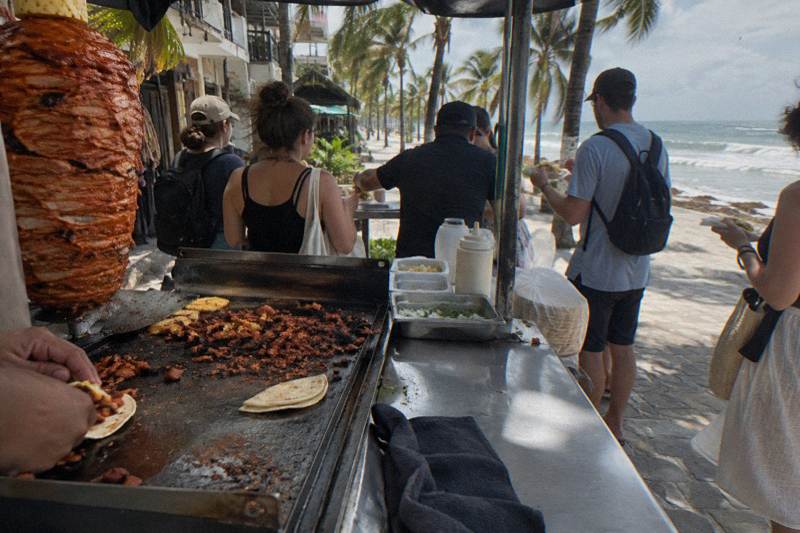
Locals in Playa del Carmen eat inland of Quinta Avenida, mostly in Centro around the Mercado Municipal on Avenida 25, along Avenida 30 and Avenida 15, and in residential neighbourhoods such as Ejido, Constituyentes and Nueva Creacion. The staples are cochinita pibil in the morning, tacos al pastor from trompos at night, and comida corrida lunches at market stalls. A taqueria five blocks from the tourist strip serves the same food at a fraction of the price.
That is the short version. The longer version is about geography, because Playa del Carmen is genuinely two food towns stacked on top of each other. The eastern edge, the five blocks between Quinta Avenida and the beach, is built for visitors: menus in three languages, covers facing the pedestrian street, cocktails priced for people who flew in that morning. The town behind it, home to a population the 2020 census put at 304,942 people, runs on a completely different economy of eating, and that economy sits on streets most day visitors never cross, according to the standard geography of the town.
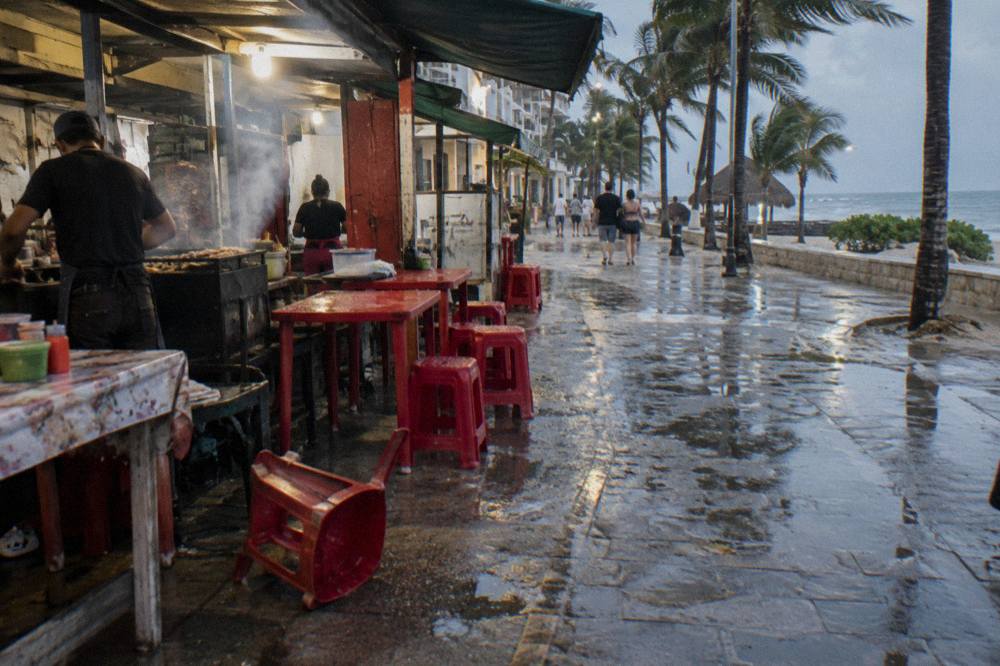
The dividing line is sharp and easy to read. Walk one block west of Quinta Avenida and prices drop, signage switches to Spanish, and the customers holding tacos stop being tourists. Two blocks further and you are in the Playa del Carmen that residents know: avenidas numbered 20, 25 and 30 carrying the everyday commerce, and calles running between them with loncherias, pollerias, jugo stands and family kitchens that open early and close when the food runs out.
This is also the territory the good guided walks cover. The Downtown Food Walk, a roughly two and a half hour tour from $75.00 per person with food and drinks included, works Centro's local side in a group capped at ten, which is exactly the format that suits narrow market aisles and counter seating. Its review pool is still small, five reviews at the time the listing was read, so judge it on the route and inclusions rather than a star figure.
If you would rather find these places yourself, the rest of this page maps them out: which neighbourhoods, which dishes, which market, and what a first-timer should know before sitting down at a counter where nobody speaks English.
Which Neighbourhoods Do Residents Actually Eat In?
The everyday eating happens in Centro's inland blocks, especially around the Mercado Municipal on Avenida 25 between Calles 8 and 10, then west along Avenida 30, and south into Constituyentes, Ejido and Nueva Creacion. Each zone has its own rhythm: Centro for market lunches, Avenida 30 for late-night trompos, Ejido for family-scale kitchens and cochinita stands. Tour infrastructure on Quinta Avenida sits a ten to fifteen minute walk from nearly all of it.
Centro is where the two food towns overlap most, and it rewards walking. Between Calles 8 and 12 the blocks off Quinta Avenida still hold working kitchens that predate the boutique fronts, and local food guides point to spots like Taqueria Honorio near Calle 8 as the kind of counter where residents queue at lunchtime. No published hours or prices belong here because none are verifiable, but the pattern is consistent: the closer to the ferry pier, the more English on the menu, and each block west sharpens the local character.
Constituyentes, the east-west avenue that functions as one of the town's real commercial spines, mixes hardware shops, bakeries and loncherias with the occasional expat cafe. Two tours work this grid deliberately. The Riviera Maya Hidden Gems Walk, about three hours from $80.00 per person in groups of ten, and A Chef's Tour with its 14+ tastings, about four hours from $65.00 per person for groups of eight, both treat the avenue and its side streets as the destination rather than a corridor to the beach. That routing decision tells you something about where the operators themselves eat.
Ejido, inland and south, is the least tourist-facing zone of the three and the most residential. This is where the Juan More Taco Cooking Class runs its 3-hour sessions from $103.66 per person, rated 5.0 across 333 reviews, one of the largest review pools of any food product in town. A cooking school does not anchor a neighbourhood by accident; it goes where the ingredients, the home-kitchen culture and the cooks live. Visitors reaching Ejido under their own steam should expect basic Spanish, excellent food and zero pretension.
The one neighbourhood to mentally re-file is Playacar, the gated resort zone to the south. It is a residential address, but its food is private-chef and resort food. The private options that meet guests there, such as the Private Chef-House Tequila Cooking experience from $269.00 with the basis varying by group size, are excellent for what they are, but they are not local eating; they are destination dining with a local accent.
What Dishes Do Locals Order, And When?
The day runs on cochinita pibil in the morning, tacos al pastor and suadero in the evening, and comida corrida, the fixed midday meal, in between. Cochinita pibil is the Yucatecan anchor: slow-roasted pork marinated in citrus and achiote, traditionally cooked in a pit, and it is the dish residents treat as the taste of home. Al pastor, by contrast, arrived with central Mexican and Lebanese influence and is not Yucatecan at all, which locals will tell you.
The timing matters more than visitors expect. Cochinita is breakfast and lunch food; local guides point to Sunday morning stands near the colectivo terminal on Calle 2 Norte, reported to sell out by noon, as the classic example. Order it at 8 a.m. from a market stall and it tastes the way it is supposed to. Order it at 9 p.m. and you are eating a reheat, because the good batches were finished hours earlier. Anyone curious about the dish's roots can read the traditional Yucatec Maya preparation of cochinita pibil, which explains both the citrus marinade and the pit-roasting that gives it the name.
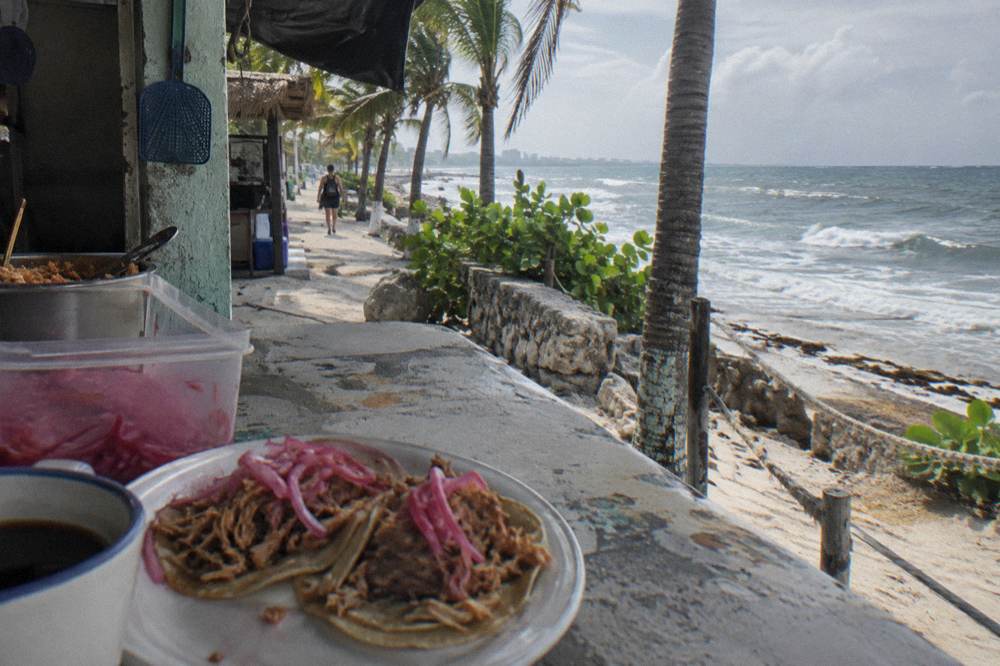
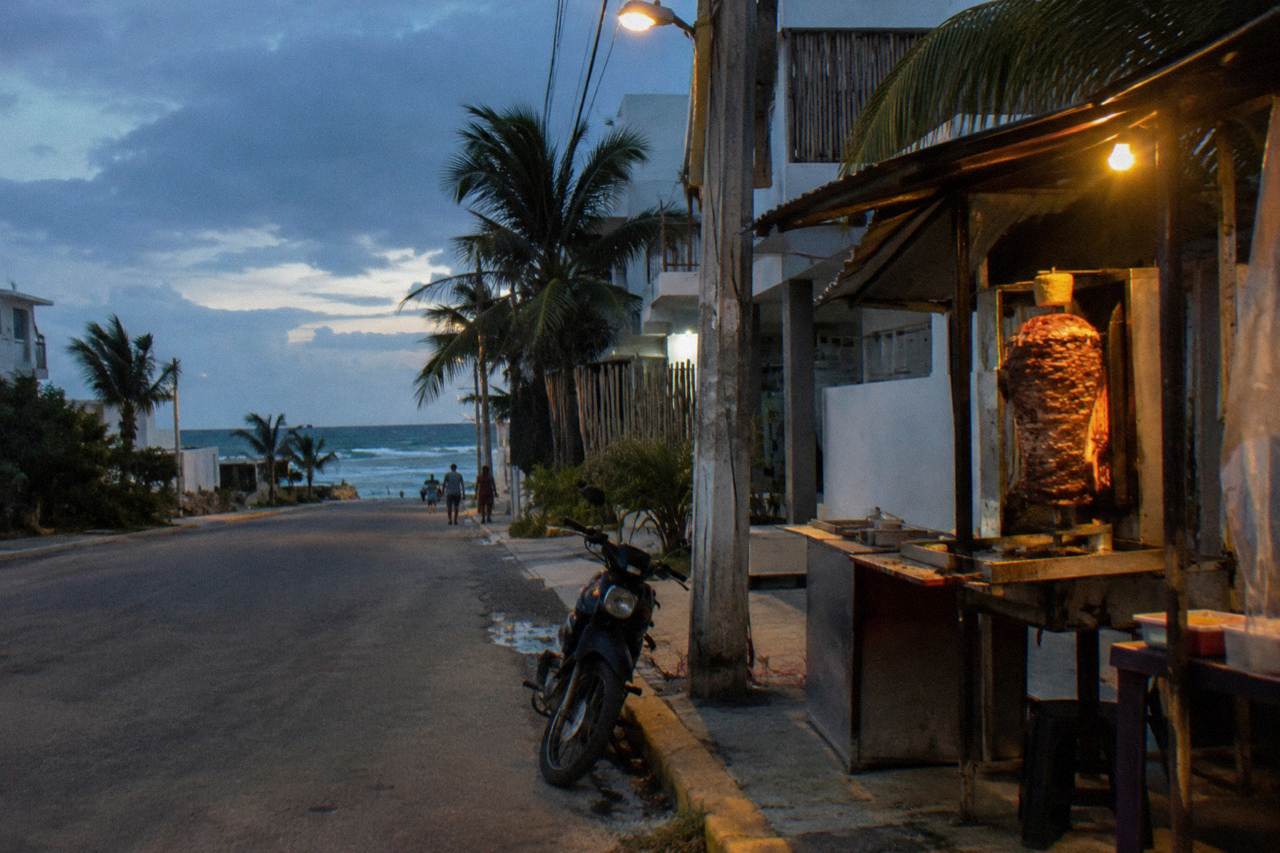
Al pastor runs the opposite schedule: the trompo spins for the evening. Local guides point to El Fogon on Avenida 30 near Calle 10, and to Tacos El Primo on Avenida 15, as the standard local answers for pastor, and both names circulate consistently in resident-facing food coverage. Again, no prices or hours are printed here because they are not verifiable, but as geography the pattern is firm: the pastor taquerias cluster on the avenidas, not the pedestrian street. Suadero, the slow-cooked beef option, shares the same counters.
The rest of the local repertoire fills the gaps: panuchos and salbutes, the Yucatecan fried-tortilla snacks; sopa de lima, the lime-and-shredded-turkey soup; huevos motuleños at breakfast; and fresh-fruit aguas by the cup everywhere. A good primer on the wider tradition is the breadth of Mexican regional cuisine, which makes clear that what Playa del Carmen serves daily is specifically the Yucatecan branch of it, not a generic national menu.
| Time of day | What locals order | Where it is strongest |
|---|---|---|
| Early morning | Cochinita pibil tacos, huevos motuleños, coffee | Mercado Municipal stands, Sunday stands near Calle 2 Norte |
| Midday | Comida corrida, sopa de lima, panuchos | Mercado Municipal and loncherias in Centro |
| Late afternoon | Aguas frescas, marquesitas from street carts | Parks and school-run streets in Constituyentes and Ejido |
| Evening and night | Tacos al pastor, suadero, gringas | Trompo taquerias on Avenida 30 and Avenida 15 |
Is The Mercado Municipal Worth Visiting On Your Own?
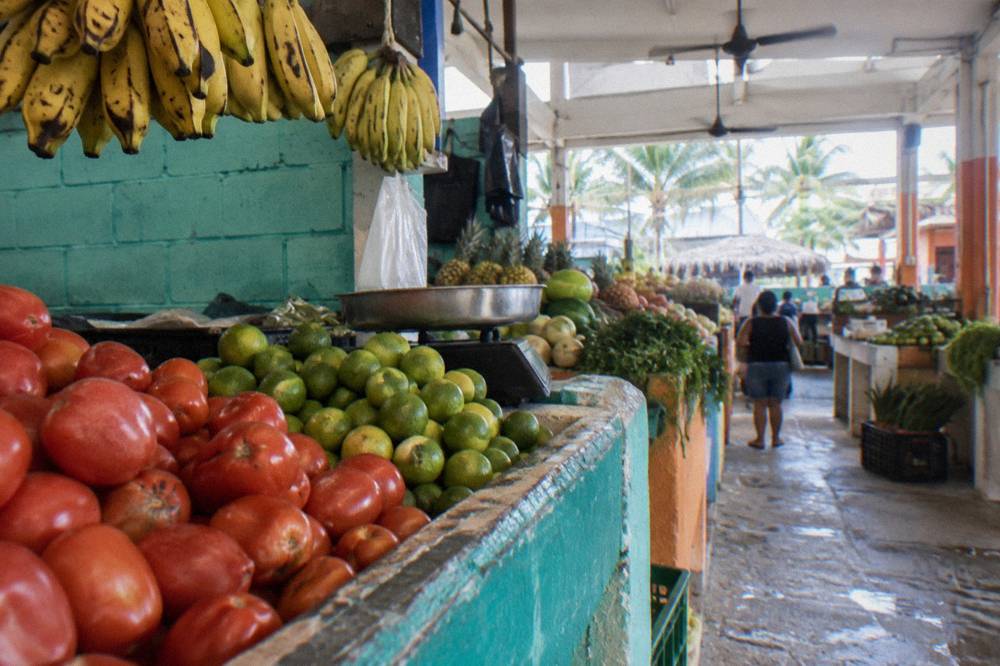
Yes, and it is the single highest-density local eating in town. The Mercado Municipal sits on Avenida 25 between Calles 8 and 10, and it is a working market where residents buy produce and eat at counter stalls, not a tourist attraction with a market theme. Local food guides describe daily operation from morning to early evening, with full breakfasts and fixed-price lunches served inside. It is a ten minute walk from the middle of Quinta Avenida.
Go hungry and go early to midday. The market is where the comida corrida tradition actually lives: a set meal, several courses, served fast to people on a lunch break. Because it is a covered hall of competing stalls, the market also teaches you to read a room, the stall with the queue of residents is the stall you want, and that single heuristic will serve you for the rest of your trip.
Two practical notes. First, cash: small stalls operate in pesos and do not take cards, so carry small notes. Second, this is the venue where a guide adds the most value fastest, because a bilingual local can translate the stalls, the cuts and the salsas in a way a phone cannot. The site's dedicated Playa del Carmen market tour guide compares the options that build a walk around the hall and the surrounding blocks, including formats that combine the market with neighbourhood stops.
The market also anchors several tours by proximity. The 8-Stop Tour running about three hours from $56.00 per person works Centro and describes multilingual guiding in French, English and Spanish, while the Parcours Gourmand Walking Tour, three hours from $57.31 per person, covers a similar Centro grid with a European-flavoured kitchen behind it. Both are new listings without review histories yet, so the route descriptions and inclusions are the honest basis for choosing between them.
What About Eating Where Locals Drink?
Local drinking culture clusters around cantina-style counters, craft beer bars off the pedestrian street, and mezcal and tequila tastings run by people who sell the bottles, not the party. The legal drinking age is 18 with ID required, and resident nightlife starts later and sits deeper in the grid than the beach clubs suggest. A crawl through three or four locals' venues is a recognised format here.
The beer side is the easiest entry point. Local coverage points to Colectivo Cervecero, a craft beer bar on Quinta Avenida itself, as the bridge venue, one foot in the tourist street and one in Mexican craft brewing, but the deeper cantina culture sits on the numbered avenidas. For visitors who want the pairing done for them, the Beer and Seafood Crawl runs about three hours from $101.53 per person with beer and food included across Centro venues in groups of ten; it carries 12 reviews, too few for a star figure, so the format is the pitch.
The spirits side has more depth. The Tequila and Mezcal Gourmet Tour, roughly four hours from $209.61 per person with drinks and food included, is the full-production version, while the 5-Hour Class with Tequila and Mezcal tasting at $105.00 per person, rated 4.9 across 158 reviews, teaches the same territory as a class. Readers weighing one against the other can start from the site's mezcal tasting guide for the flavour and vocabulary basics before deciding.
One habit worth copying from residents: the sobremesa, the long table after the meal. Local eating is not fast food eaten standing up, it is a counter lunch that runs an hour because the people at the next stool are neighbours. Build slack into your afternoon and you will eat like the town does rather than like a schedule.
Can A Guided Local Walk Shortcut The Search?
Yes, and in Playa del Carmen the shortcut is unusually good value, because the local-food tours are inexpensive relative to what they unlock: a guide who knows which trompo to stop at, counters you would not choose alone, and the confidence to come back on your own. Guided local walks run roughly $56 to $85 per person for two and a half to four hours with food included. The best-reviewed options concentrate on Centro and its inland edges.
The most reviewed food product in town, full stop, is the Eating With Carmen Walking Tour: rated 4.9 across 1,369 reviews, about three hours, from $77.51 with the basis varying by group size and shown on the booking page, food and drinks included, free cancellation per the listing, and a group cap of 24. It works the Quinta Avenida corridor but is run by a local operator whose whole premise is the resident kitchen, which is why its review pool dwarfs everything else on offer. For a first visit, it is the orientation.
Tighter and younger, the Rockstarcrawls Street Food Crawl runs about three hours from $69.99 per person, rated 4.8 across 125 reviews, groups capped at 20, food and drinks included, free cancellation per the listing. It leans street-food-forward, more trompos and counter stalls, fewer sit-down stops, which suits travellers who want the night-time version of local eating. Readers comparing formats stop by stop will find the street food tour guide breaks the routes down further.
At the budget end, the 4-Hour Budget Food Crawl from $23.46 per person in groups of eight is the outlier price on the board, a new listing with no reviews yet, food included, free cancellation per the listing, working the Ejido side of town. Read its inclusions carefully on the booking page, because a low headline price sometimes means fewer tastings rather than a bargain version of the same crawl.
How Do You Eat Local Safely And Politely?
Eat where the queue is, carry small peso notes, stick to stalls with high turnover and hot grills, and keep the basic courtesies: a greeting before an order, patience with limited English, and cash for small counters. Playa del Carmen's local kitchens are informal, not lawless, and the same judgment that serves a street-food eaters anywhere, busy stall, visible cooking, resident customers, serves you here.
Practicalities first. Salsa caution is real: ask which is picante before spooning, because habanero is the regional default and it does not negotiate. Water at established market stalls and touring kitchens is filtered as standard practice, but visitors with sensitive stomachs should stay with bottled drinks at independent carts, a hedge rather than a warning. Anyone with an allergy should message an operator before booking any tour; no guided walk can silently accommodate a restriction it does not know about, and every listing on this site carries a contact route for exactly that question.
Money and manners. Counter meals are cash businesses in pesos, so withdraw small notes rather than walking up with a large bill for a single taco. Residents dine early by visitor standards, the comida between about 2 and 4 p.m., the pastor run from evening into the night, and syncing to those rhythms puts you in the room with locals rather than beside other travellers. A greeting, bueno dias or buenas tardes, before ordering is the single politeness most appreciated.
| Situation | What locals do | What to copy |
|---|---|---|
| Choosing a stall | Join the longest local queue | Queue length beats reviews apps here |
| Paying | Cash in pesos, paid on finishing at many counters | Carry small notes, expect no card terminal |
| Salsa | Ask which is hot before using | Point and ask, que tan picante |
| Timing | Comida at mid-afternoon, pastor after dark | Shift dinner later than hotel hours |
| Drinks at counters | Aguas frescas or a beer with tacos | Skip cocktails at taco counters |
For a fuller treatment of the town's everyday dishes and where they came from, the companion piece on what food Playa del Carmen is known for covers the Yucatecan canon dish by dish.
The honest summary from Playa Del Carmen Food Tours: residents eat well, cheaply and inland, and every street that makes that possible is within a fifteen minute walk of the tourist strip. Whether you cross those blocks with a guide on the first day, as the Eating With Carmen or Rockstarcrawls walks are built for, or wander in alone with the market as your first stop, the local side of Playa del Carmen is the easiest "hidden" food scene in the Riviera Maya to actually find.
Common Questions About Where Locals Eat In Playa Del Carmen
Where Do Locals Eat In Playa Del Carmen?
Locals eat inland of Quinta Avenida: around the Mercado Municipal on Avenida 25, along Avenida 30 and Avenida 15 for tacos al pastor, and in the residential neighbourhoods of Constituyentes, Ejido and Nueva Creacion. The staples are cochinita pibil mornings, comida corrida at midday and trompo tacos at night.
Do Locals Eat On Quinta Avenida?
Mostly no. The pedestrian street is priced and built for visitors. Residents eat a few blocks west on the numbered avenidas and around the market, though a handful of bridge venues on Quinta Avenida, including craft beer bars, do draw a mixed local crowd.
What Is The Best Time Of Day To Eat Where Locals Eat?
Mid-morning to mid-afternoon. Cochinita pibil sells out by early afternoon at the best stands, comida corrida runs over the long lunch, and the pastor trompos fire up in the evening and run late into the night. Syncing to those rhythms puts you in line with residents rather than other visitors.
Is Eating At Local Market Stalls Safe?
The general street-food judgment applies: busy stall, visible hot cooking, high turnover, resident customers. Established market stalls are a normal part of daily life here. Visitors with cautious stomachs should stick to bottled drinks at independent carts and hot, freshly cooked food.
Do You Need Spanish To Eat At Local Spots?
You need about ten words, not fluency. A greeting, a count of tacos, and pointing at what the person beside you is having covers almost every counter. Guided local walks exist precisely to bridge the rest, translating salsas, cuts and specials as you go.
Can A Food Tour Take Me Where Locals Actually Eat?
Yes. Options such as the Downtown Food Walk, about two and a half hours from $75.00 per person with food and drinks included, the Eating With Carmen Walking Tour, rated 4.9 across 1,369 reviews, and the Rockstarcrawls Street Food Crawl, from $69.99 per person, are all built around the resident side of town rather than the tourist strip.