Is It Safe To Go To 5th Avenue Playa Del Carmen?
5th Avenue is Playa del Carmen's pedestrian main street, generally safe for visitors who keep their wits about them. Learn the scams to skip, how evenings feel different, and how a guided food walk changes the picture.
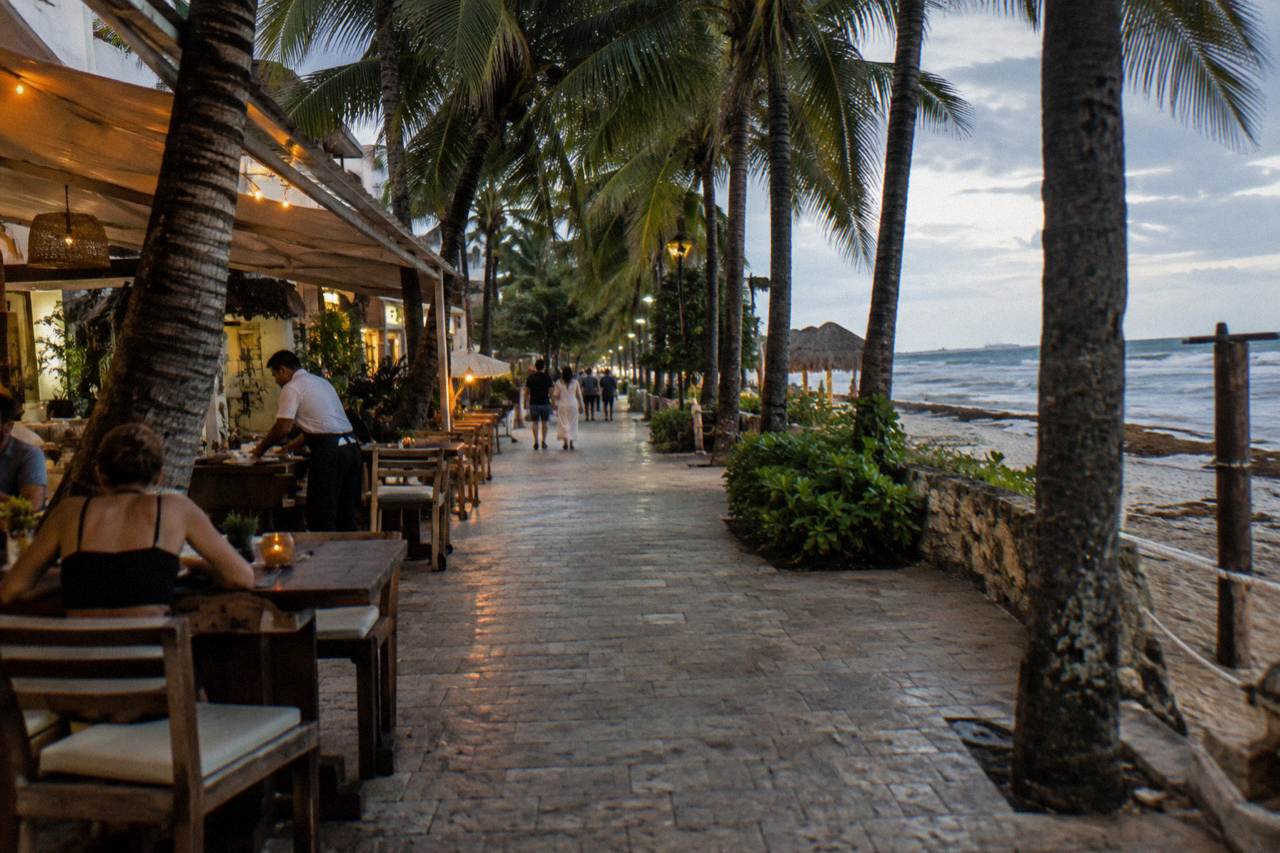
Yes, for the overwhelming majority of visitors. Quinta Avenida, the pedestrian spine of Playa del Carmen, is the most heavily trafficked and most tourist-focused street in the city, walked daily by cruise passengers, families and solo travellers. The risks worth planning for are petty and ordinary: aggressive vendors, inflated prices, pickpocketing in dense crowds, and overdoing it at happy hour, not anything dramatic. Once you've settled that the avenue is safe, the next question is usually whether to cross the water, and our honest take on whether a Cozumel day trip justifies the ferry fare covers timing, seasons, and food-first alternatives.
The street itself runs parallel to the beach as a long pedestrian avenue, closed to cars along its core, and it is where the town's tourist economy lives. Restaurants, mezcal bars, cigar shops, silver stores and taco stands sit shoulder to shoulder, and the evening paseo, the traditional after-dinner stroll, fills the avenue with locals and visitors alike until late. That density is the safety story: a street with thousands of people on it at 9 p.m. is a street where ordinary precautions go a long way. If you'd rather have a local sort out where to eat before your stroll, the guide to evening dinner tours in Playa del Carmen covers what each one costs and where groups meet.
This page is a practical answer to the question, not a police blotter. There are no crime statistics here and no government advisory language, because neither would help you plan a dinner. What does help is knowing how the street works at different hours, which nuisances to expect, and where a guided walk genuinely reduces friction. The Playa Del Carmen Food Tours site covers the eating side of the avenue in depth; this article covers the safety side, with the two overlapping wherever food and street life meet.
If your plan is to eat your way down the avenue with someone who knows it, the three walks below are the most reviewed guided options in the neighbourhood, each with a local guide, food included, and a meeting point on or near the pedestrian core.
The Eating With Carmen Walking Tour, about 3 hours from $77.51, is the most reviewed food walk in town, rated 4.9 across 1,369 reviews, with food and drinks included and free cancellation on the booking page. The Rockstarcrawls Street Food Crawl, from $69.99 per person, rated 4.8 across 125 reviews, takes a younger, bar-and-taco-crawl angle over a similar 3 hours. Secret Food Tours' 8+ Yucatan dishes walk, from $81.00 per person, rated 5.0 across 44 reviews, goes deepest on regional cooking with a smaller group cap of 12.
Because the risks are petty, the fixes are ordinary. For pickpocketing, keep your phone and wallet in front pockets or a cross-body bag worn to the front, especially during the evening paseo, when the avenue is at its densest until late. For aggressive vendors, a polite no thanks and keeping your pace covers nearly every encounter; you are never obliged to stop. For inflated prices, look for a printed menu before you sit down, and settle the price of anything sold by weight up front. For happy hour, alternate mezcal with water and food, because the bars sit shoulder to shoulder with everything else and overshooting is easy.
A guided walk absorbs most of this friction: a local guide handles the vendor exchanges, food and drinks are included so your costs are set before you start, and the meeting points sit on or near the pedestrian core, so you begin and end on the busiest, most walked stretch of the street rather than somewhere quiet on its edge.
What Kind Of Street Is Quinta Avenida After Dark?
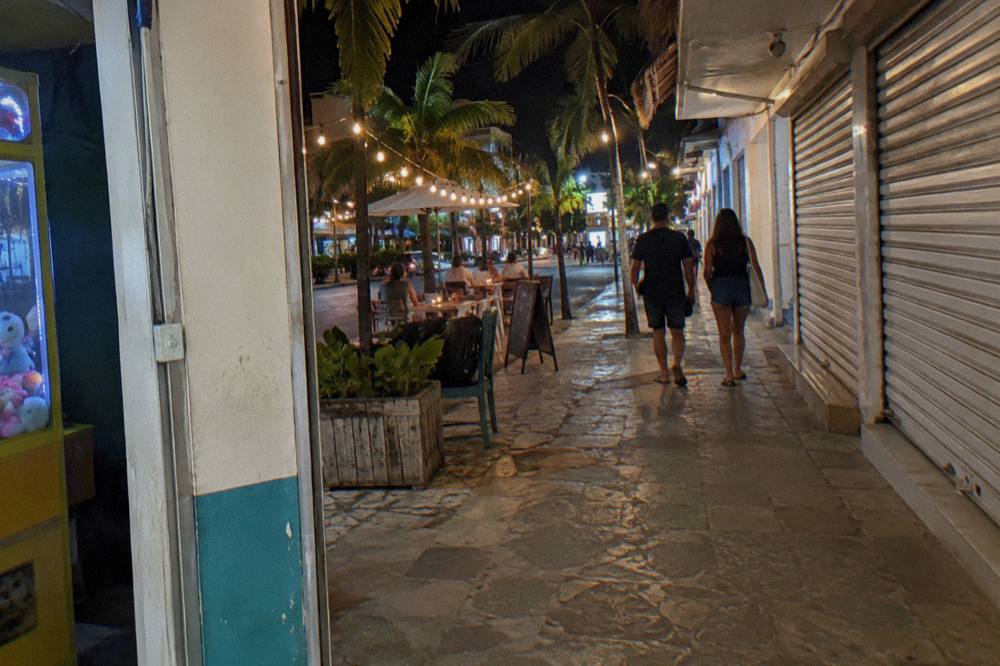
After dark, Quinta Avenida becomes busier, not emptier. The stretch between Calles 10 and 20 fills with diners, street performers and shop lights from around 7 p.m. until midnight, and the side streets immediately off the avenue stay active too. The blocks far north and far south thin out later, so the standard advice is to stay where the people and lights are.
Tourism began here with the passenger ferry to Cozumel, and the avenue grew up around foot traffic; it was built for walking, not driving, which removes a whole category of risk that traffic-heavy tourist streets carry. The town's population reached 304,942 at the 2020 census, and a large share of its working life, restaurants, tour offices, galleries, happens on or just off this one street.
The rhythm matters for planning. Early evening, roughly 6 to 9 p.m., is family time: strollers, ice cream, sidewalk tables. Late evening tilts toward bars and louder music, especially on the blocks closest to the beach clubs. None of this is unsafe in any unusual way, but the mood at 11 p.m. is different from 7 p.m., and visitors who want a calm experience simply shift earlier. A guided evening walk handles this timing for you; guides route the quiet, food-heavy blocks and finish at a sensible hour.
A common worry is being out at night in an unfamiliar city. The practical answer is that the pedestrian core of 5th Avenue is one of the most anonymous-feeling places you can be in the Riviera Maya: crowds, lighting, and open storefronts the whole way. The walks in the band above all end within a few blocks of the avenue's core, and the Eating With Carmen tour lists free cancellation on its booking page, so a same-day decision carries little commitment. Rather than walking long dark stretches after a late dinner, take a licensed taxi back to your hotel; they are plentiful along the avenue's edges all evening.
Which Everyday Nuisances Should You Expect On 5th Avenue?
The realistic annoyances are vendors calling out from doorways, timeshare and tour promoters with clipboards, inflated first prices at souvenir shops, and the occasional request to buy a photo or a bracelet. None of these are dangerous. A polite no thanks, repeated once if needed, handles almost every interaction, and firm but friendly negotiation is expected anywhere prices are not printed.
The clipboard promoters deserve their own sentence, because they catch more visitors off guard than anything else on the street. Someone offering a free dinner, a discounted tour or a gift in exchange for a short presentation is almost always selling a timeshare or vacation-club membership. Declining takes two seconds. The same rule covers the free tequila sample that becomes a hard sell: a tasting you sought out, like the guided experiences on this site, is a different thing from a tasting that found you.
Pickpocketing in dense crowds is the one petty crime worth active prevention. Crowds concentrate during cruise-ship hours in the middle of the day and around big evening events, and the standard precautions apply: front pockets, zipped bags worn in front, and phones put away when not in use. Splitting cash between two places means a lost wallet is an inconvenience rather than a ruined evening.
| Nuisance | Where It Happens | Best Response |
|---|---|---|
| Timeshare and tour promoters | Doorways and plaza entrances mid-avenue | Politely decline and keep walking |
| First-price souvenirs | Shops without printed prices | Compare a few shops, negotiate with a smile |
| Aggressive restaurant touting | Dinner hours near the beach blocks | Decide before you are hailed, or book a guided walk |
| Pickpocketing in crowds | Peak cruise hours and event evenings | Front pockets, zipped day bag, phone stowed |
| Unrequested items or photos | Anywhere on the promenade | Refuse before it is in your hand |
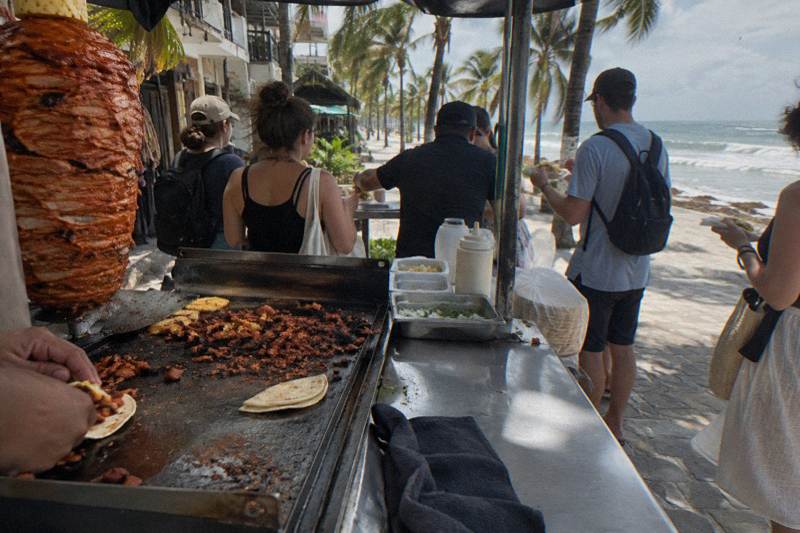
Dining safety, in the food-safety sense, is rarely the issue on the avenue itself. Establishments serving thousands of visitors weekly live and die by reviews, and cooked-to-order street food from a busy stand is among the safest eating in town, because turnover is high and food is made in front of you. The fuller discussion of what to order and what suits a cautious stomach is in the what to eat in Playa del Carmen guide.
Is It Safe To Walk From Your Hotel To 5th Avenue?
For most hotels in central Playa del Carmen, yes, easily. Centro properties sit a five to fifteen minute walk from the avenue, and the walk passes restaurants, mini-marts and other hotels the entire way. For stays in Playacar or the far northern beach zones, the walk is longer than it looks on a map, and the standard practice is a taxi for the return trip at night.
Daytime is straightforward everywhere. The grid of numbered calles makes the town genuinely hard to get lost in, and locals are accustomed to giving directions. After dark, the calculus changes mainly with distance: three lit, busy blocks are nothing; twenty quiet ones are unnecessary. Licensed taxis are plentiful along the avenue's edges, and using them for night returns is the single most repeated piece of local advice.
Visitors staying farther out who still want the street-food experience have an option that removes the walk entirely: tours with pickup or meeting points in the Centro core. The Authentic Taco Walk, from $73.00 per person, about 2 hours 30 minutes, keeps its group to 10 and its route in the central grid, so the entire evening happens in the walkable heart of town. It is a small listing with 5 reviews, so there is no star rating to report, but the format suits anyone whose main concern is simply staying in the busiest zone.
For travellers who prefer plant-based eating, the same logic applies: a guided route through the central streets beats improvising after dark on an unfamiliar diet. The Vegan Mexican Food Tour, from $83.52 per person over about 3 hours, rated 4.9 across 45 reviews, runs with food and drinks included and free cancellation on the booking page.
How Does A Guided Food Walk Change The Safety Picture?
A guided walk does three concrete things: it fixes your route through the busiest, best-lit blocks; it puts a local beside you for vendor conversations, price checks and language; and it removes the where-next decision-making that makes tired travellers sloppy. None of that is a safety guarantee, and no honest page should promise one. It is friction reduction.
For a first night in town, or for solo travellers and nervous eaters, that friction reduction is worth real money. The food-tour format also handles the transactions. On the Eating With Carmen walk, food and drinks are included in the price, so there is no menu maths, no haggling and no awkward refusals along the route. The group cap is 24, large enough to feel social, small enough that the guide still answers questions. The street food crawl caps at 20 and leans into the late-evening taco-and-bar rhythm, while the Secret Food Tours walk caps at 12 for a quieter table-to-table pace. If you still have questions about street food hygiene or the walk back to your hotel after dark, the Playa del Carmen safety guide for food lovers covers the practical details.
Guides also carry institutional knowledge that no blog post can: which block has construction this month, which stall is worth a detour, when the crowds surge. The street changes; the guide changes with it.
For visitors with dietary needs, the honest line is the same one this site always gives: never assume an operator can accommodate an allergy, and message them before booking. Vegetarian-friendly options exist, including the Veggie-Friendly Food and City Walk, from $59.00 over about 4 hours, a small listing with 10 reviews, but allergy handling is a conversation with the operator, not a checkbox.
What About Drinks, Drinking Age And Evening Pace?
The legal drinking age in Mexico is 18 in all states, with ID required, and enforcement on 5th Avenue is routine rather than strict. The drink-related risks on the avenue are ordinary ones: unmeasured pours at happy hour, open-all-night bars on the party blocks, and walking home long after the crowds have gone. Pacing, eating while drinking, and a taxi for the return are the whole playbook.
Mezcal and tequila culture on the avenue rewards curiosity, and a structured tasting teaches more than a bar pour ever will. The Tequila and Mezcal Gourmet Tour, from $209.61 per person over about 4 hours with food and drinks included, pairs four stops with guided pours; it is a small listing with 6 reviews, so no rating applies. Visitors who want the spirits without the price tag can look at the Playa del Carmen tequila tasting guide for the options.
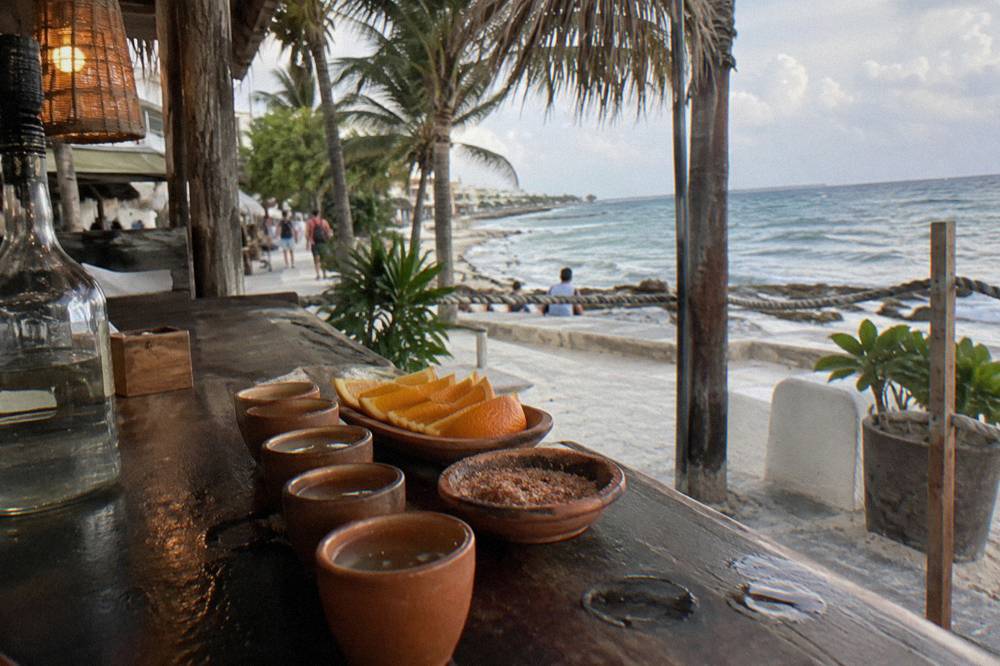
Two practical notes on drinks. First, water: served water in established restaurants and on guided tours is filtered or bottled, and cooked food from busy stands is not the common source of traveller stomachs that folklore claims. Second, the party blocks near the beach clubs run loudest and latest; the food-focused stretches a few blocks inland stay calmer and close earlier, which suits anyone whose goal is dinner rather than a night out.
When Is The Best Time Of Year For A Calm Visit?
For stable weather and thin crowds, late November through April is the sweet spot: this is the driest, most comfortable stretch of the year in Playa del Carmen. October is the wettest month by a wide margin, 284.3 mm against March's 28.1 mm, and the Atlantic hurricane season runs June 1 to November 30 with activity peaking around September 10, so autumn travellers should build flexibility into plans rather than avoid the town.
None of this makes any month unsafe. A rainy afternoon on the avenue means covered restaurant patios and sudden quiet; a sargassum summer changes the beach view, not the street. Sargassum arrivals have appeared most summers since 2011 and are seasonal by nature, which is why no honest page states a current beach status; the street itself is unaffected either way.
Shoulder-season travel has a safety-adjacent upside worth naming: thinner crowds mean less pickpocketing pressure, easier restaurant tables and more patient service. The trade-off is heat in the late spring, with mean daily maxima climbing from 30.8 C in April toward the 32.9 C peak in August. Evening walks sit comfortably below those numbers in every month of the year, which is one reason food tours here almost all run in the late afternoon and evening.
Practical Habits That Cover Ninety Percent Of Safety
The habits that matter are unglamorous: keep valuables in front pockets or a zipped bag, agree on taxi fares or use metered ranks, decide your dinner plan before touts can decide it for you, drink alongside food, and keep your phone charged for the ride home. Add a photo of your passport stored offline, and you have handled nearly every realistic problem a visitor to this street encounters.
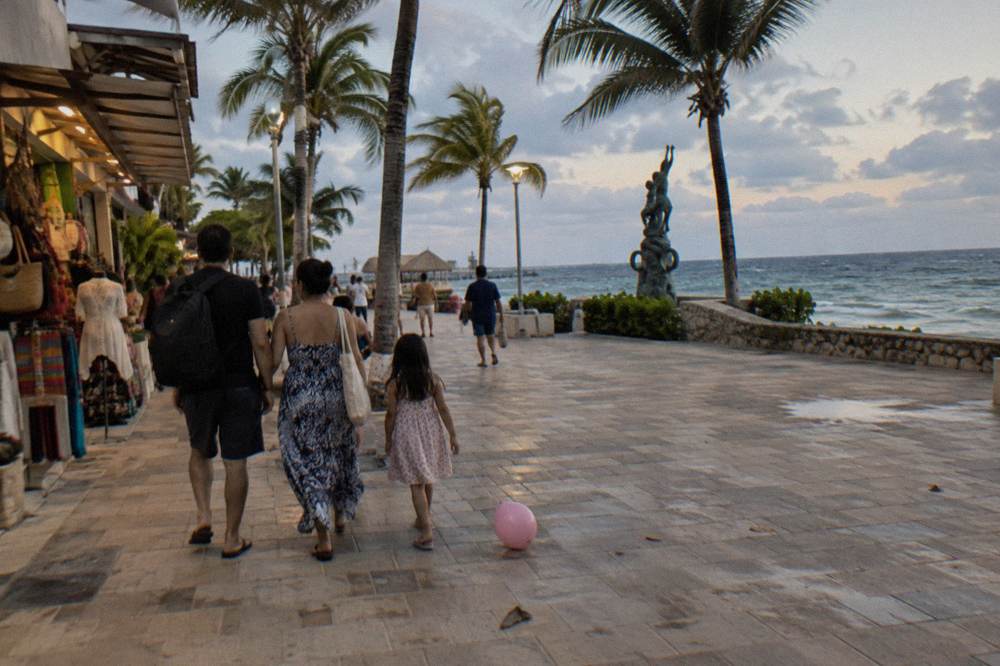
A few Playa-specific notes round this out. Comfortable shoes matter more than people expect; the pedestrian avenue is cobbled in stretches and long. Sun and heat are the most reliable source of misery on a daytime visit, so water and shade breaks are planning, not paranoia. And if you are travelling with kids, the early-evening window, before 8 p.m., is when the avenue is at its most family-shaped, and the food tour with kids guide covers which walks welcome younger eaters.
The guided options below are the three most reviewed food walks in the 5th Avenue area, all with food included, all with free cancellation on their booking pages, and all run by operators whose whole business is making this street legible to first-time visitors.
Common Questions About Safety On 5th Avenue
Is It Safe To Go To 5th Avenue Playa Del Carmen?
For the vast majority of visitors, yes. Quinta Avenida is a car-free pedestrian street with continuous foot traffic, lighting and open storefronts until late. The realistic risks are petty ones, overcharging, crowds and overdoing drinks, and ordinary precautions handle them. No page can promise safety, but this street is the most visitor-oriented address in the city.
Is It Safe To Walk On 5th Avenue At Night?
The core blocks between roughly Calles 10 and 20 stay busy until midnight, and evening is the street's liveliest period. Stay where lights and people are, keep bags zipped and in front, and take a licensed taxi for long return trips after a late dinner rather than walking dark stretches alone.
Are The Street Vendors And Promoters Pushy Or Dangerous?
Pushy sometimes, dangerous no. Expect door-to-door calls, timeshare promoters with clipboards and offers of free gifts. A polite no thanks, repeated once if needed, ends nearly every interaction. Anything described as free in exchange for a short presentation is a sales pitch.
Is It Safe To Eat Street Food Around 5th Avenue?
Busy stands with high turnover and food cooked in front of you are among the most reliable eating in town. Guided walks remove the guesswork entirely, since the Eating With Carmen tour and the street food crawl both include all food and drinks in the price.
What Is The Drinking Age, And Is Alcohol A Concern?
The legal drinking age in Mexico is 18 in all states and ID is required. The concerns on the avenue are ordinary ones: unmeasured happy-hour pours and very late bar blocks. Eating while drinking and taking a taxi home cover most of it.
Does A Guided Food Tour Make The Evening Safer?
It reduces friction rather than promising protection. A guide fixes a route through the busiest blocks, handles vendor conversations and prices, and keeps the group on schedule, which suits first nights, solo travellers and anyone anxious about the language gap. Most walks here also include free cancellation on the booking page.