How Long Does It Take To Walk 5th Avenue In Playa Del Carmen?
Walking Playa del Carmen's Quinta Avenida takes longer than the map suggests: crowds, storefronts and taco stands slow the pace, and guided food walks put that to work.
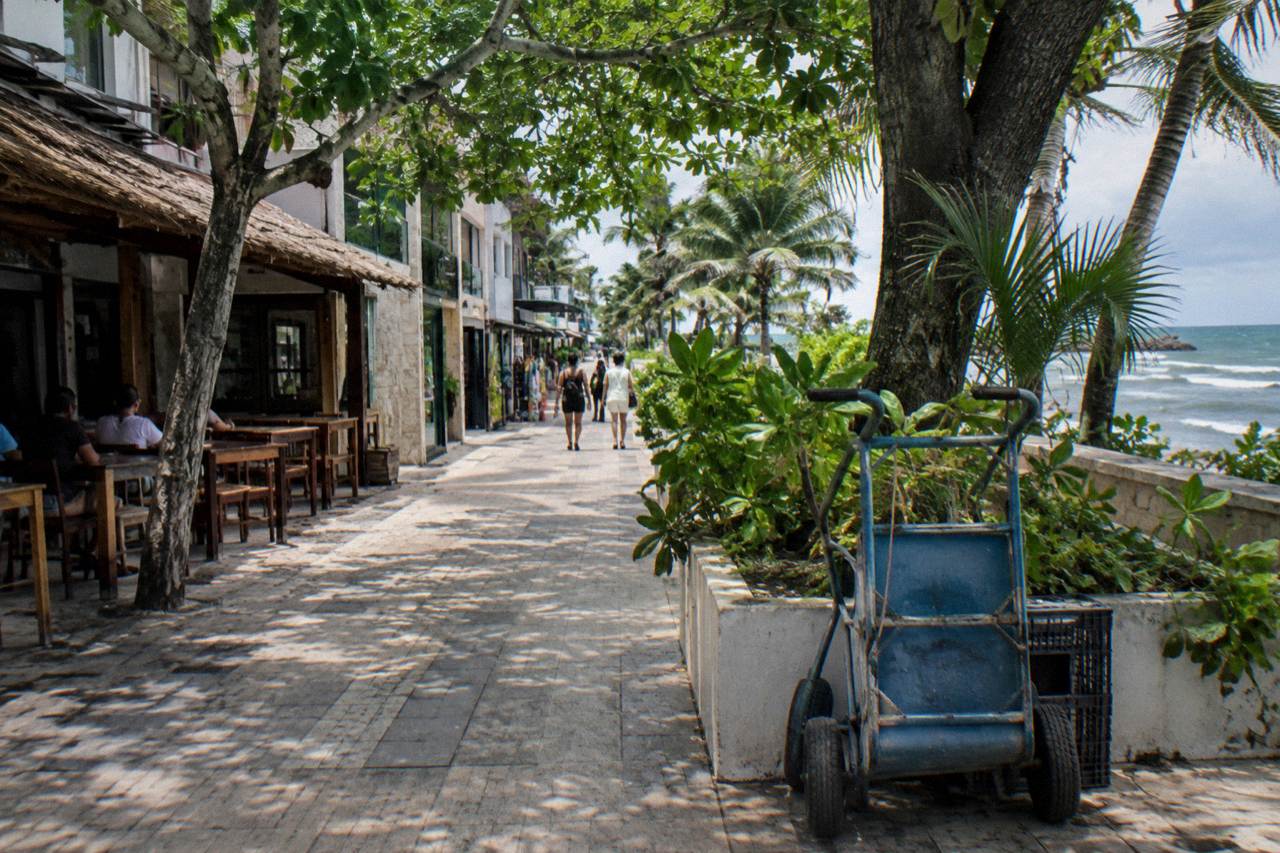
Quinta Avenida, the pedestrian avenue that runs parallel to the beach, is the street almost every visitor to Playa del Carmen ends up on at some point. No single verified walking time exists for it, because the avenue behaves less like a route and more like a corridor of interruptions: shops, taco counters, mezcal bars, galleries, and corners where the crowd simply stops moving. What can be said with confidence comes from how the professionals pace it. The guided food walks that work this street run about three hours each, and they do not cover all of it. If you are basing yourself nearby, the differences between Playa del Carmen and Playacar explain why staying in the gated resort zone to the south puts you a much longer walk from all of this.
There is no verified length or crossing time for Quinta Avenida, and any single figure would mislead, since walking speed collapses the moment food enters the picture. Guided tours along the avenue run about three hours, shorter downtown walks budget two and a half, and a brisk walker could finish in a fraction of that, so plan for a morning, an afternoon, or an evening rather than a commute.
The reason the tours budget so generously is that the avenue rewards dawdling. A walking food tour is not a transportation plan; it is a sequence of stops, and the stop is the product. The Eating With Carmen Walking Tour, the most reviewed food walk on the street with a 4.9 rating across 1,369 reviews, takes roughly three hours for its route through the Quinta Avenida area. The Rockstarcrawls Street Food Crawl, also based around the avenue, runs about three hours too, from $69.99 per person. If operators whose entire business is pacing this street allot three hours, a visitor planning to eat, browse, and photograph along it should assume something similar. If you're still weighing whether the street justifies that kind of time commitment, our honest verdict on whether 5th Avenue is worth the visit separates the hype from the payoff.
For a walker with no stops at all, the experience is a different animal. The avenue is flat, pedestrianized for most of its length, and continuous underfoot, so an uninterrupted through-walk is physically easy. But almost nobody does it uninterrupted. A street in that state of flux keeps changing what is worth pausing for, which is another way of saying your walking time is not stable either.
This is where the comparison with the guides becomes useful rather than decorative. The city itself publishes no official stroll duration, and this page will not invent one. What the touring record shows is a consensus: three hours is the number operators land on when food is involved, and two and a half when the route tightens into a single district. Treat those as your planning brackets.
If the goal is to eat your way down the avenue rather than merely traverse it, a guided walk turns the open question of timing into a fixed, bookable block. These are the three options most aligned with a Quinta Avenida walking plan:
What Actually Determines Your Walking Time
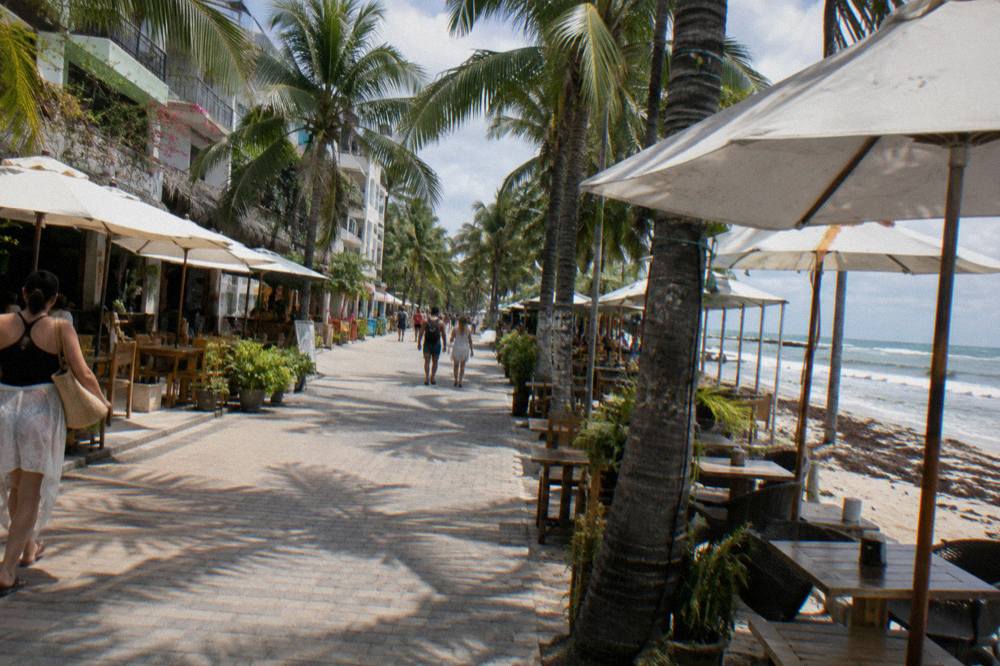
Four factors dominate: how many stops you make, the time of day, the season, and how far along the avenue you decide to go before turning back. Crowd density in the evening can slow progress to a shuffle in the central blocks, while midday heat pushes walkers indoors and off the street entirely. The guided walks answer all four at once by fixing a route, a duration, and a set of stops in advance.
Stops are the obvious one. The difference between a through-walk and a food walk is not distance, it is dwell time. The Downtown Food Walk, a two and a half hour Centro tour with food and drinks included, visits a handful of taco spots at a pace no independent walker would spontaneously choose. Its price is from $75.00 per person, and with only five reviews so far it is a small listing rather than a proven commodity, but the format illustrates the point: the operator has done the math on how long taco stops actually take when a group of up to ten people orders, eats, and regroups.
Time of day matters almost as much. The avenue's central stretch, the blocks closest to Parque Los Fundadores and the ferry pier, concentrates both tourists and street performers, and in the early evening it is the densest pedestrian environment in town. Locals and repeat visitors tend to walk it in the morning, when shade still covers much of the west side of the street and restaurant patios are being set up rather than filled. The street-food crawl operators who run evening departures account for this with slower routes and fewer, longer stops.
Season is the quieter variable. Playa del Carmen's climate data shows a real spread across the year: mean daily maximum temperatures run from 27.8 C in January to 32.9 C in August, and October is the wettest month at 284.3 mm of rain against March's 28.1 mm, per the Servicio Meteorologico Nacional normals summarized at Wikipedia's Playa del Carmen entry. A late-summer afternoon walk is a different physical project from a February morning one, and rain days cluster between June and November, which is also the Atlantic hurricane season window of June 1 to November 30 tracked by NOAA's Climate Center.
| Tour format | Duration | Area | What sets the pace |
|---|---|---|---|
| Downtown Food Walk | ~2 hours 30 minutes | Centro | Fixed taco stops, group of up to 10 |
| Eating With Carmen Walking Tour | ~3 hours | Quinta Avenida | Multiple sit-down stops, food and drinks included |
| Rockstarcrawls Street Food Crawl | ~3 hours | Quinta Avenida | Crawl format, up to 20 guests |
| 8-Stop Tour, FR/EN/ES | ~3 hours | Centro | Eight stops, trilingual guiding |
| Tropical Fruit Tasting, Budget Fare | ~3 hours | Playa del Carmen | Guided tasting, from $22.00 per person |
The table reads as a set of professional estimates. Nobody walks the avenue at the speed of a timer; they walk it at the speed of the slowest taco.
How The Avenue Changes Character As You Walk
Quinta Avenida is not one street but a chain of districts, and walking time shifts with each. The south end near the beach park and ferry terminal is the busiest and slowest, the central blocks mix retail and dining at a moderate pace, and the stretches north of Calle 24 and toward Constituyentes thin out into a more local, faster-walking rhythm. Most visitors walk a segment, not the whole thing.
The south end anchors the tourist trade for a historical reason: the passenger ferry to Cozumel, across the channel, is what started Playa del Carmen's tourism economy in the first place, a history summarized at Wikipedia's Cozumel page. Ferry passengers spill onto the avenue's southern blocks, and everything within a few streets of that terminal is tuned to them, from the souvenir density to the speed of service. This is where the Eating With Carmen Walking Tour concentrates its roughly three hours, working the Quinta Avenida area with food and drinks included, from $77.51, with the booking page showing the price basis since it varies with group size.
The middle blocks carry the retail weight, and this is where independent walkers lose time without noticing. Storefront browsing is a stop that does not feel like one, and it is also where the 2026 churn is most visible, with the reported closures clustered in exactly the restaurant-heavy blocks a food-minded walker would target. The compensating news is that the blocks around Constituyentes host a different scene entirely: the Riviera Maya Hidden Gems Walk runs about three hours there, from $80.00 per person, in groups capped at ten, and A Chef's Tour with its 14+ tastings format also works that northern zone in roughly four hours from $65.00 per person.
North and inland, the pace picks up because the audience changes. The 4-Hour Budget Food Crawl, from $23.46 per person, works the Ejido district, where the street life is resident-facing rather than visitor-facing, and the Juan More Taco Cooking Class, rated 5.0 across 333 reviews, operates from the Ejido side as well. These are the neighborhoods where an unhurried avenue walk turns into a real errand-running stroll, and where the food is priced accordingly.
The practical takeaway for planning: pick a segment based on what you want from it. The southern blocks for atmosphere and the classic tourist spectacle, the middle for shopping and sit-down eating, the north for a quieter, more local walk. Trying to do all of it in one pass is how people end up describing the avenue as exhausting rather than enjoyable.
Why Guided Walks Take Three Hours For A Street You Could Cross Faster
A guided food walk sells pacing, not transport. Three hours buys a route with scheduled stops, a guide who knows which counters are worth the queue, and a group structure that turns a solo decision-fatigue walk into a sequence someone else has already optimized. The three-hour duration that recurs across the Quinta Avenida tours is a professional judgment about how long enjoyment lasts before heat, fullness, and fatigue set in.
Consider what fills those hours. The Eating With Carmen format includes both food and drinks across multiple stops for groups of up to 24. The Rockstarcrawls crawl does the same for up to 20, from $69.99 per person, rated 4.8 across 125 reviews. Neither operator is padding; sit-down stops with ordering, serving, eating, and walking between venues genuinely consume that time, and the group sizes mean regrouping alone eats minutes at every corner.
There is also a knowledge premium that is easy to undervalue. An independent walker deciding between two similar-looking taco counters has no information; a guide has been through both dozens of times. The street's rapid turnover makes this more valuable, not less: on a street where local press counted fifteen closures in a year, a guide's current stop list is worth more than any published listicle, which ages in months. The Secret Food Tours 8+ dishes walk, rated 5.0 across 44 reviews from $81.00 per person, caps groups at twelve precisely so the guide can keep the route tight and current.
For visitors whose real question is "how long will this take if I want to eat well," the guided answer is cleaner than any independent estimate. The Downtown Food Walk, mentioned earlier, is the compact version at two and a half hours in Centro with food and drinks included. The full-avenue experience is the three-hour format. Neither requires you to walk the whole street, and both end somewhere worth being. If safety is the real question behind your planning, our guide to staying safe on 5th Avenue covers common scams, what evenings are like, and how a guide changes things.
| Guided walk | Duration | Price from | Reviews |
|---|---|---|---|
| Eating With Carmen Walking Tour | ~3 hours | $77.51 | 4.9 across 1,369 reviews |
| Rockstarcrawls Street Food Crawl | ~3 hours | $69.99 per person | 4.8 across 125 reviews |
| Secret Food Tours, 8+ Dishes | ~3 hours | $81.00 per person | 5.0 across 44 reviews |
| Downtown Food Walk | ~2 hours 30 minutes | $75.00 per person | 5 reviews, new listing |
| A Chef's Tour, 14+ Tastings | ~4 hours | $65.00 per person | 2 reviews, new listing |
When To Walk: Time Of Day And Season
Morning offers the coolest air and thinnest crowds, late afternoon into evening offers the atmosphere at the cost of density, and the December-to-April dry window is the most comfortable season of all. July through October combines the year's highest temperatures with its heaviest rain, and October alone averages 284.3 mm of it, so a rainy-season walk needs a flexible plan rather than a fixed schedule.
The morning case is straightforward. Temperatures at the low end of the day sit well below the afternoon peak in every month, restaurant patios are empty, and the avenue's shade side is walkable. The touring record backs this up indirectly: cooking classes and market-based experiences, which involve standing and eating, overwhelmingly run morning departures, and the Mercado Municipal on Avenida 25 is a morning institution, reported in local food guides as operating daily from early morning with breakfasts and fixed-price comidas. The market sits a few blocks inland from the avenue, and pairing a market morning with an afternoon avenue walk is a classic local pattern.
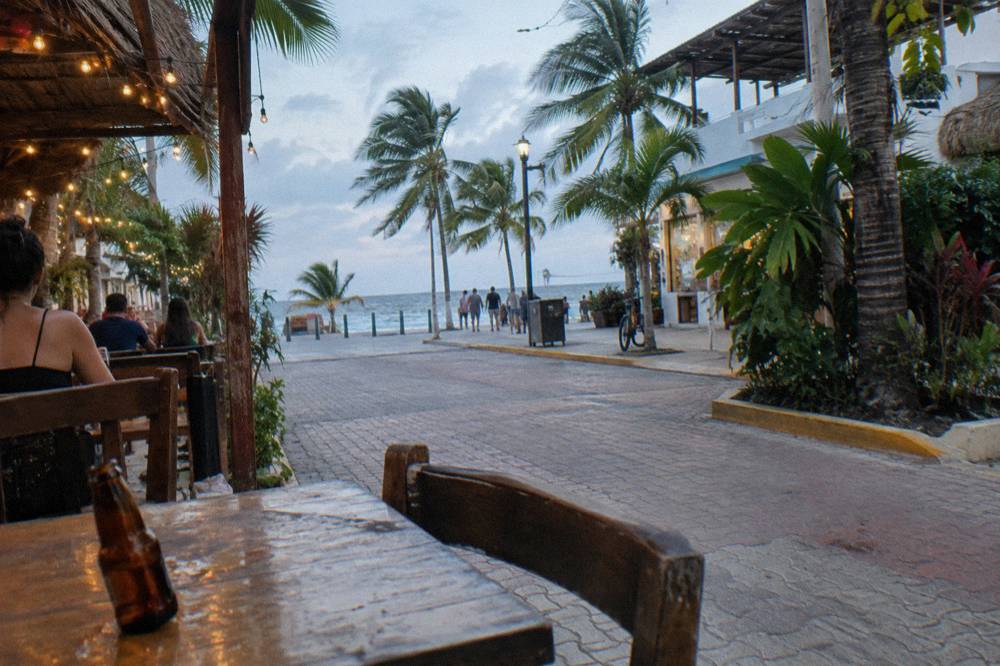
Evening is when the avenue becomes the thing photographs promise: lit patios, street performers, and the full parade of visitors. It is also the slowest walking of the day by a wide margin, because the central blocks crowd up. An evening food crawl, like the Rockstarcrawls format, is built for exactly this, moving a group through the density with stops already chosen. An independent evening walk should budget double whatever a daytime estimate would suggest, purely for foot traffic.
Seasonally, the numbers point where intuition does. March is the driest month at 28.1 mm of rain; October the wettest at 284.3 mm; the June-to-November stretch carries most of the year's 102.8 rainy days. Temperatures are mildest December through April, with mean daily maxima from roughly 28 to 32 C across that window. None of this makes a summer walk a bad idea, but it makes a summer walk a morning activity, and a rainy-season walk a plan with an indoor fallback, which on this street means a restaurant, so the fallback is hardly a hardship.
One seasonal note that belongs here rather than repeated later: sargassum seaweed arrival on the beaches has been a feature of most summers since 2011. It does not touch the avenue itself, but it shifts beach-bound walkers onto the pedestrian street during affected weeks, adding to foot traffic. Never rely on any single day's beach status; it changes.
Food Stops That Will Slow You Down, In A Good Way
The stops that stretch an avenue walk from minutes into hours are the food ones, and the signature dish of the region is cochinita pibil, the Yucatec Maya slow-roasted pork marinated in citrus and achiote, traditionally cooked in a pit. Traditional Mexican cuisine as a whole was inscribed on UNESCO's Intangible Cultural Heritage list in 2010, which is as good a justification as any for letting lunch dictate your walking pace.
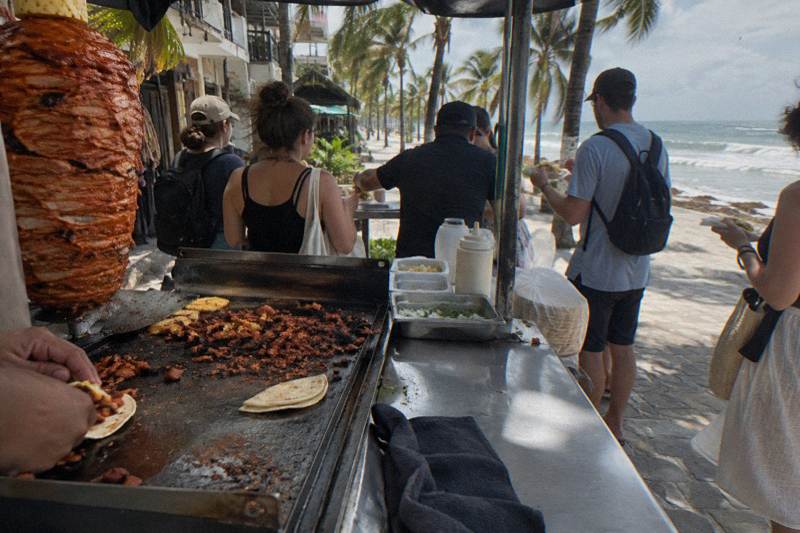
The cochinita connection matters because Playa del Carmen sits in the Yucatan's culinary orbit, and the dish anchors the region's food identity, as Wikipedia's cochinita pibil entry documents. Local food guides point to the Mercado Municipal on Avenida 25 as the most reliable daily source of cochinita tacos, a few blocks off the avenue itself. Al pastor, by contrast, the trompo-shaved pork taco most visitors associate with Mexico, is not a Yucatecan dish at all, though the avenue's taquerias serve plenty of it.
This is the honest case for a guided walk again, and it is the reason this site exists. The street's food landscape changes fast, and a fixed three-hour route with a guide, whether the Eating With Carmen walk, the street-food crawl, or the smaller Downtown Food Walk, converts uncertainty into a scheduled meal. The vegan option is covered too: the Vegan Mexican Food Tour, rated 4.9 across 45 reviews from $83.52 per person, runs about three hours in Centro with food and drinks included.
For walkers who prefer to build their own pace, the pattern that works is stops spaced by district rather than by distance. One market stop, one mid-avenue sit-down, one evening taco counter, each with its own block of time, and the walking in between becomes the connective pleasure rather than the chore. For a deeper look at what lines the street, the companion piece on what lines 5th Avenue itemizes the blocks, and the guide to a Quinta Avenida food walk covers the guided end of the same street. This is also, in the end, what Playa Del Carmen Food Tours is for: matching a walking plan to a table.
Common Questions About Walking 5th Avenue
How Long Does It Take To Walk 5th Avenue In Playa Del Carmen?
There is no verified length or crossing time for the avenue, and this page will not invent one. The guided food walks that work the street run about three hours each, and the compact downtown versions run two and a half, which are the best available professional estimates of how long a food-paced walk takes.
Is 5th Avenue Walkable For Everyone?
The avenue is flat and pedestrianized for most of its length, so it is walkable for most fitness levels and strollers. The variable is heat and crowd density rather than terrain, so morning walks suit heat-sensitive visitors and evening walks suit anyone comfortable in a dense crowd.
What Is The Best Time Of Day To Walk It?
Morning for cool air and thin crowds, evening for atmosphere at the cost of density. Midday in the warmer months is the least comfortable window, with mean daily maxima reaching 32.9 C in August.
Can A Food Tour Replace Walking The Avenue Independently?
It covers a segment of it well. The Eating With Carmen Walking Tour and the Rockstarcrawls Street Food Crawl both work the Quinta Avenida area for about three hours with food and drinks included, so a tour can be the walk, with lunch built in.
Do I Need To Book A Food Walk In Advance?
Group sizes are capped, between 8 and 24 guests on the shared walks, so popular departures can fill. Most listings show free cancellation, so booking early and adjusting later is a low-risk approach.