Mexican Dishes To Try In Playa Del Carmen: A Plain-English Glossary
Menus in Playa del Carmen mix Yucatecan Maya cooking with pan-Mexican staples, and the dish names do not always explain themselves. This glossary translates what you are ordering, dish by dish, and points to where each one is served.
Short answer
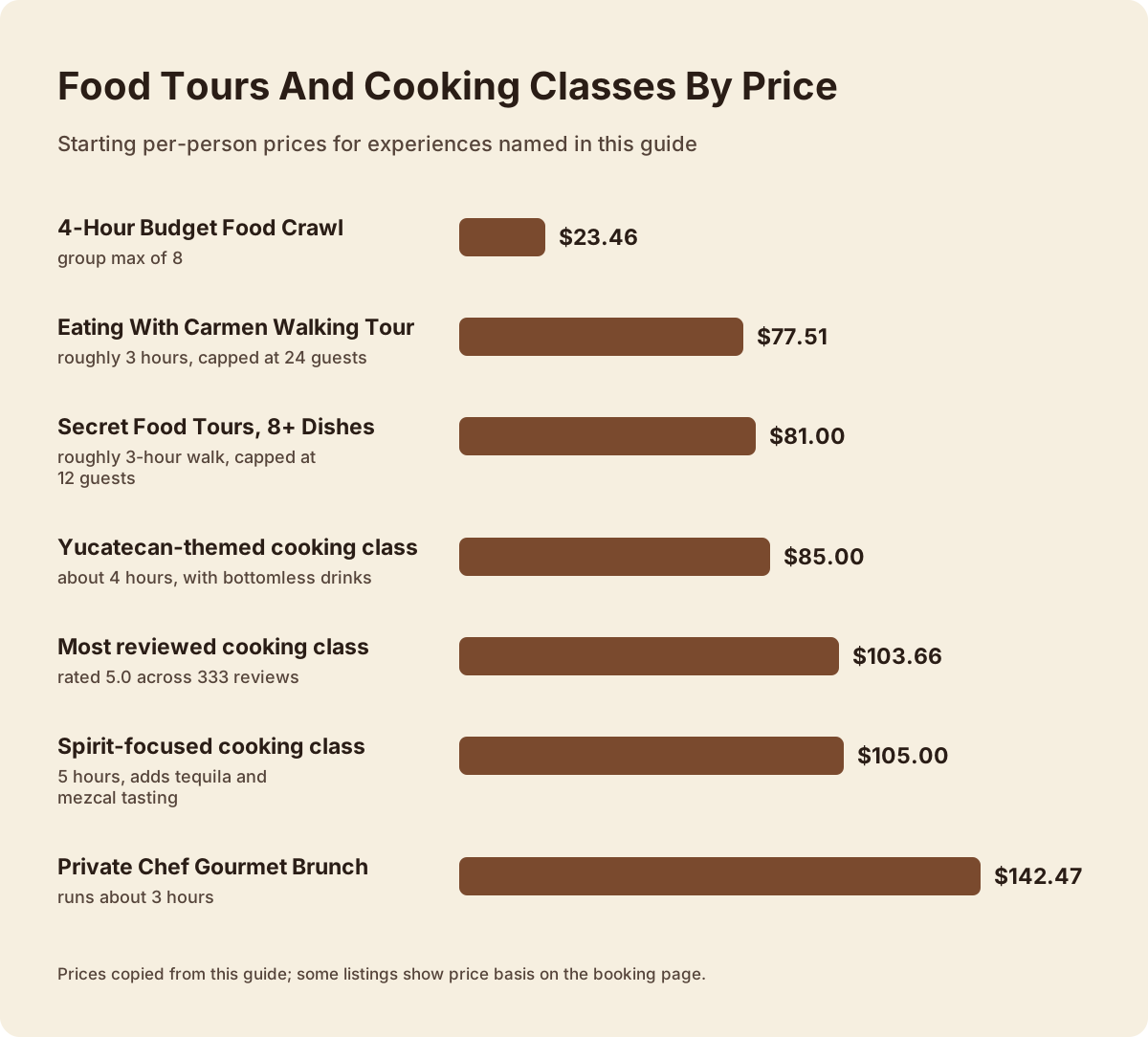
Start with cochinita pibil, the Yucatec Maya slow-roasted pork marinated in citrus and achiote, then work through tacos al pastor, panuchos, salbutes, sopa de lima and marquesitas. A 3-hour food crawl costs from $23.46 per person, and the most reviewed walking tour in town is rated 4.9 across 1,369 reviews, from $77.51.
Menus in Playa del Carmen sit at a crossroads. The town is in Quintana Roo, on the Yucatan Peninsula, so its kitchen leans Yucatecan: citrus-marinated pork, pit roasting, masa snacks and recado spice pastes. But because the town feeds travellers from every part of Mexico and the world, the same street also serves al pastor from a trompo, Oaxacan moles and northern-style grilled meats. Traditional Mexican cuisine as a whole was inscribed on UNESCO's Intangible Cultural Heritage list in 2010, the first cuisine to receive that recognition, and Playa del Carmen is one of the easier places on the coast to taste why.
The friction is vocabulary. A first-time reader staring at "panucho, salbute, cochinita, recado negro" has no way to know what arrives on the plate, how heavy it is, or whether it counts as a full meal. That uncertainty is exactly what a guided walk removes: a guide translates the menu, orders in the right quantity, and moves you between kitchens in a single evening. On the Playa Del Carmen Food Tours site, this glossary is the written version of that same translation, and it ends at live tours you can book the same day.
What Is Cochinita Pibil And Why Is It Everywhere In Playa Del Carmen?
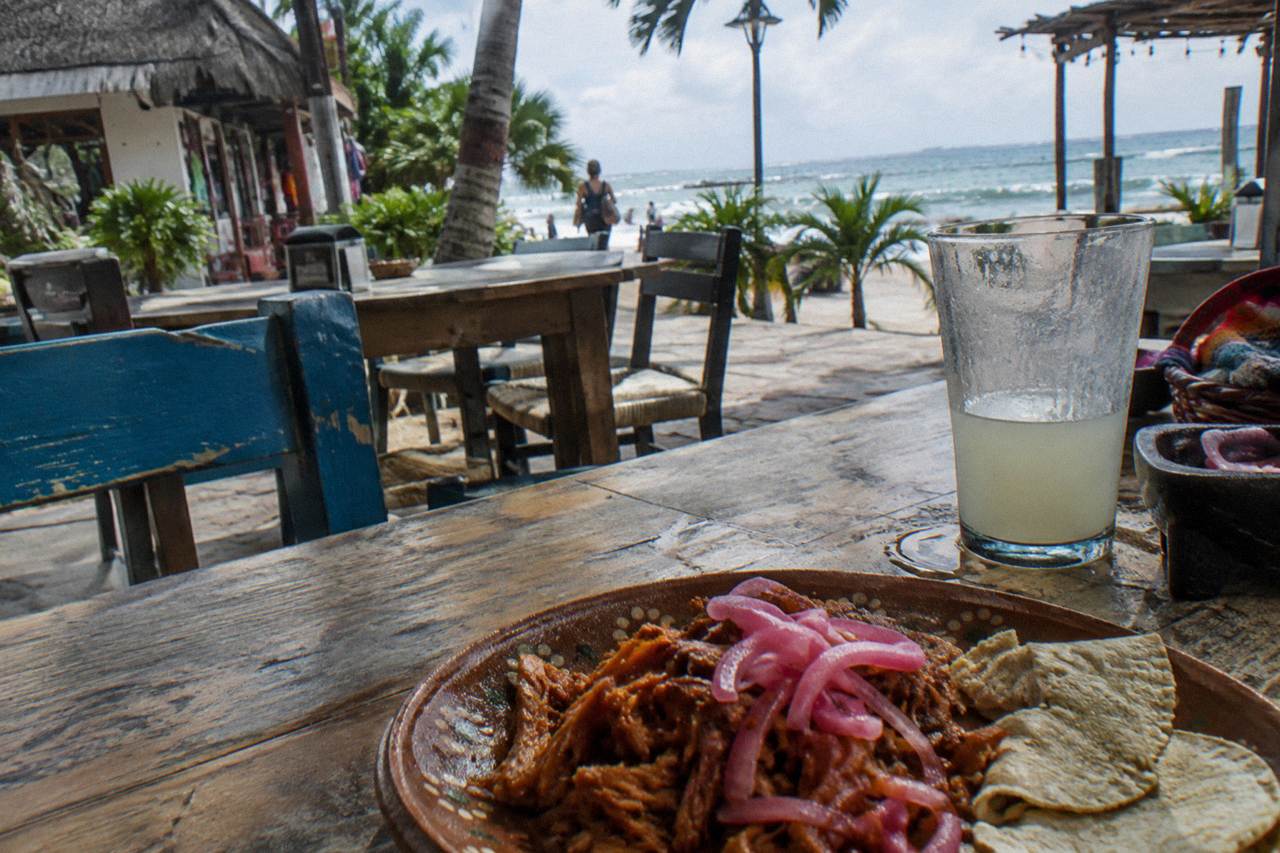
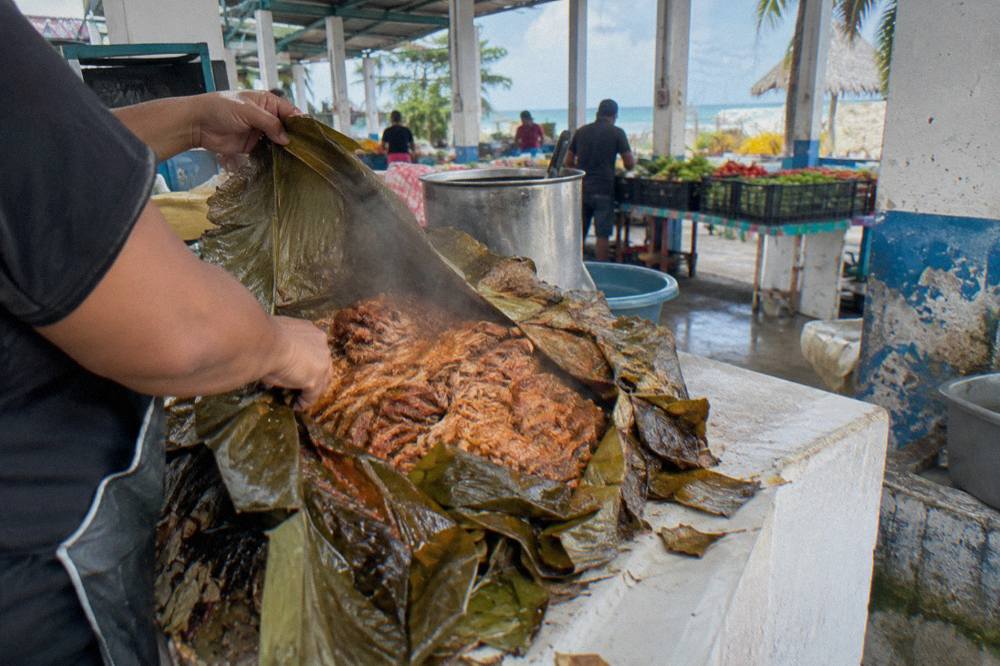
Cochinita pibil is a Yucatec Maya dish of pork marinated in strongly acidic citrus juice and annatto seed paste, wrapped in banana leaves and slow-roasted, traditionally in a pit called a pib. The red colour comes from achiote, not chili heat, and the result is shreddable, tangy and mild. It is the most representative Yucatecan dish in Playa del Carmen, served at breakfast, from taco stands and as a dinner plate.
The name splits cleanly. Cochinita is the diminutive of pig, pibil refers to the cooking method, and the two together describe pork cooked the buried, pit-roasted way. The traditional preparation belongs to the Yucatan Peninsula rather than to Mexico as a whole, which is why you will see it on Playa del Carmen menus far more often than in, say, Mexico City. It arrives three main ways: tucked into soft corn tortillas as tacos, served as a plate over black beans and pickled red onion, or pressed into a torta for the colectivo crowd at breakfast time.
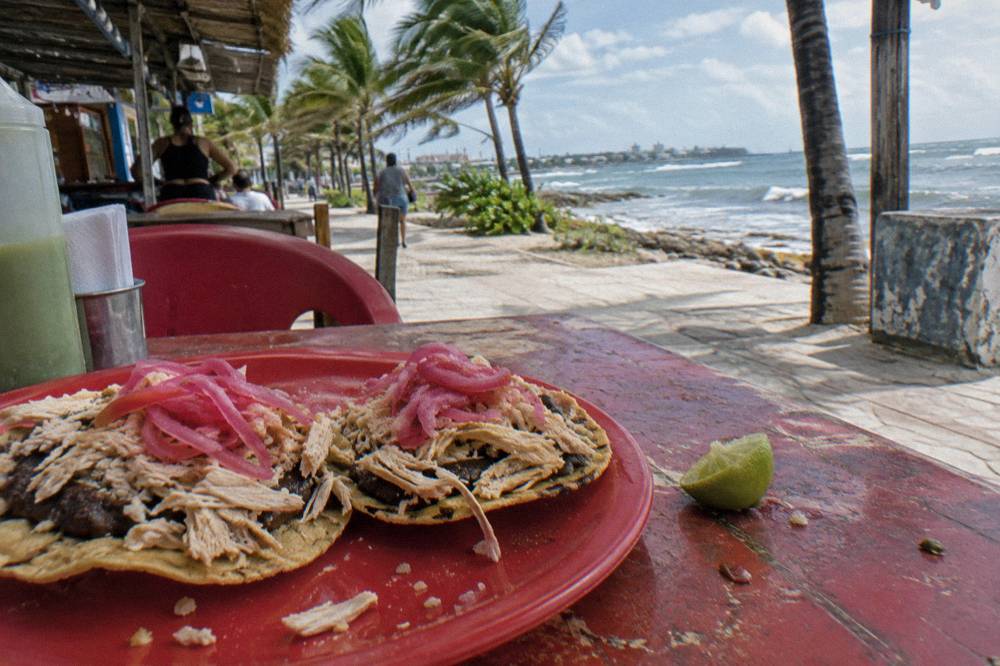
Condiments define the dish as much as the pork. Pickled red onion, escabeche, and a fiery habanero salsa served on the side are the classic companions, and the local habit is to add both in small amounts rather than drowning the meat. If you order one Yucatecan dish in Playa del Carmen, cochinita pibil is the one dish on nearly every local menu from the Mercado Municipal to hotel breakfasts. Where to find it district by district is covered further down this page.
Which Yucatecan Dishes Should You Try First In Playa Del Carmen?
Beyond cochinita pibil, the first-timer's shortlist of Yucatecan dishes is panuchos, salbutes, sopa de lima and relleno negro, because each shows a different face of the region's cooking. Panuchos and salbutes are fried masa snacks, sopa de lima is the signature chicken and lime broth, and recado pastes show up as the backbone of several main plates. Together with marquesitas for dessert, they cover a full Yucatecan meal in five orders.
Panuchos and salbutes look like siblings and are worth telling apart, because the difference changes the texture. A panucho is a tortilla slit and stuffed with refried black beans before frying, so it carries a bean layer under its toppings, usually shredded turkey or chicken, lettuce, tomato and pickled onion. A salbute skips the bean stuffing and puffs instead when fried, staying lighter and thinner. Both are snacks rather than meals, and both are typically ordered by the piece, three or four at a time.
Sopa de lima is the Yucatan's comfort soup: a clear chicken broth seasoned with a local lime variety, with strips of fried tortilla added just before serving so they keep some crunch. Relleno negro is the darker, more intense end of the spectrum, a turkey or chicken stew coloured black by charred chiles and recado paste, usually eaten over rice. Papadzules, rolled tortillas in a pumpkin-seed sauce with egg filling, are the older, quieter cousin that many visitors never meet unless a guide points them out. For dessert, a marquesita is a rolled, crepe-like wafer filled with Edam cheese, a Yucatecan street sweet that is crisp, salty-sweet and impossible to eat neatly.
| Dish | What it is | How it is served | Spice level |
|---|---|---|---|
| Cochinita pibil | Citrus and achiote-marinated pork, slow-roasted | Tacos, plates, tortas | Mild; salsa on the side |
| Panucho | Fried tortilla stuffed with black beans | Snack plate of 3 to 4 | Mild |
| Salbute | Puffed fried tortilla, no bean layer | Snack plate of 3 to 4 | Mild |
| Sopa de lima | Chicken-lime broth with fried tortilla strips | Soup course | Mild |
| Relleno negro | Turkey stew blackened with charred chiles | Over rice | Medium to hot |
| Papadzules | Tortillas in pumpkin-seed sauce, egg filling | Snack or starter | Mild |
| Marquesita | Rolled crisp wafer with Edam cheese | Street dessert | Sweet |
A guided walk is the efficient way to meet five of these in one evening without doing the menu research yourself. The trio below is a good spread across format and price.
One option built specifically around regional depth is Secret Food Tours, 8+ Dishes, a roughly 3-hour walk capped at 12 guests, from $81.00 per person, rated 5.0 across 44 reviews. Eight-plus stops in a small group is the format most likely to put papadzules or relleno negro in front of you unprompted, dishes that rarely make it onto a visitor's own order.
What Do The Salsa And Side Names On A Playa Del Carmen Menu Mean?
The salsa vocabulary matters more than the dish vocabulary for heat, because most Yucatecan dishes arrive mild and the salsa you add decides the burn. Habanero is the peninsula's native chili and it is very hot, escabeche means pickled onions and vegetables, and recado refers to the spice pastes that season many braises. Nopales are cactus paddles, and frijoles con puerco is the slow-cooked beans-and-pork dish many families eat on Mondays.
Habanero deserves respect rather than fear. It is fruity and genuinely pleasant in small doses, and the local method is a few drops over cochinita or a whole pickled onion from the escabeche jar, not a spoonful. Salsa xnipec, the Yucatecan table salsa, mixes habanero with chopped tomato, onion and the same sour orange used in pibil marinade, so it carries flavour as well as fire. Recado comes in colours: recado rojo is the achiote base of cochinita, recado negro is the charred-chile paste behind relleno negro, and blanco seasons some white-meat dishes. None of this is trivia; it is ordering information, because knowing that recado negro means a dark, intense stew changes what you pick at 9 p.m.
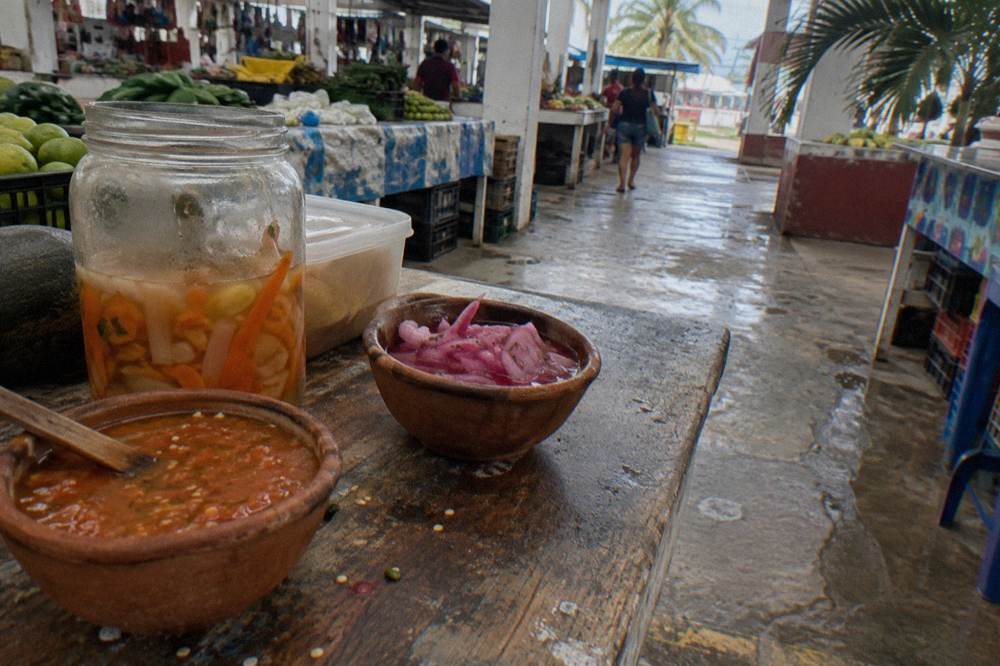
The drinks column of the menu has its own quiet glossary worth decoding. Chaya, a peninsula-native leafy green, appears blended into fresh waters and sometimes in pancakes at breakfast spots, and it is the regional answer to the agua fresca jars lined up at market stalls. Agua de horchata, jamaica and limón are the three standby sweet waters at almost any counter, while a michelada, beer in a salt-rimmed glass with lime and sometimes clamato and spice, is the savoury companion to fried snacks. Knowing the names gets you a drink you actually want instead of a default soda.
| Menu term | Plain English | Heat or flavour note |
|---|---|---|
| Habanero | The Yucatan's native orange chili | Very hot; use in drops |
| Xnipec | Habanero salsa with tomato, onion, sour orange | Hot and fruity |
| Escabeche | Pickled onions, sometimes carrots and chiles | Sour, cooling |
| Recado rojo | Achiote-citrus spice paste | Earthy, mild |
| Recado negro | Charred-chile paste for dark stews | Deep, medium heat |
| Nopales | Cactus paddles, usually grilled or in salad | Tangy, vegetal |
| Frijoles con puerco | Black beans slow-cooked with pork | Mild, hearty |
| Chaya | Peninsula-native leafy green in drinks and batters | Herbal, earthy |
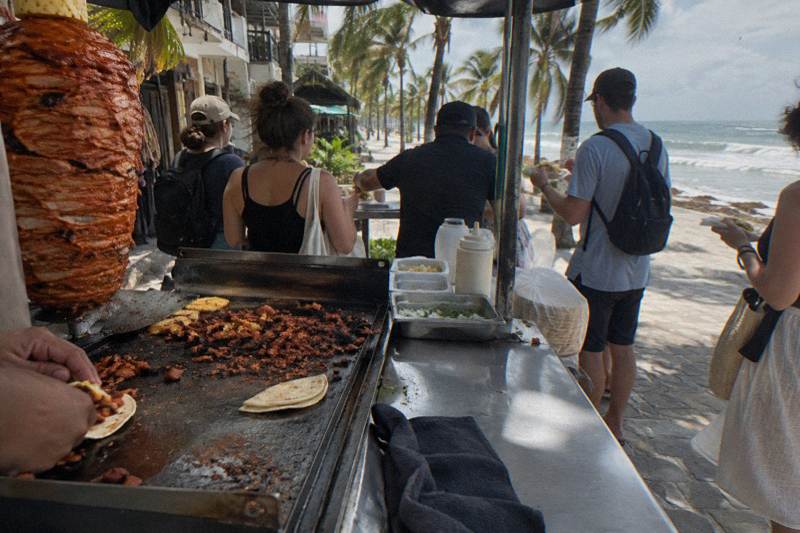
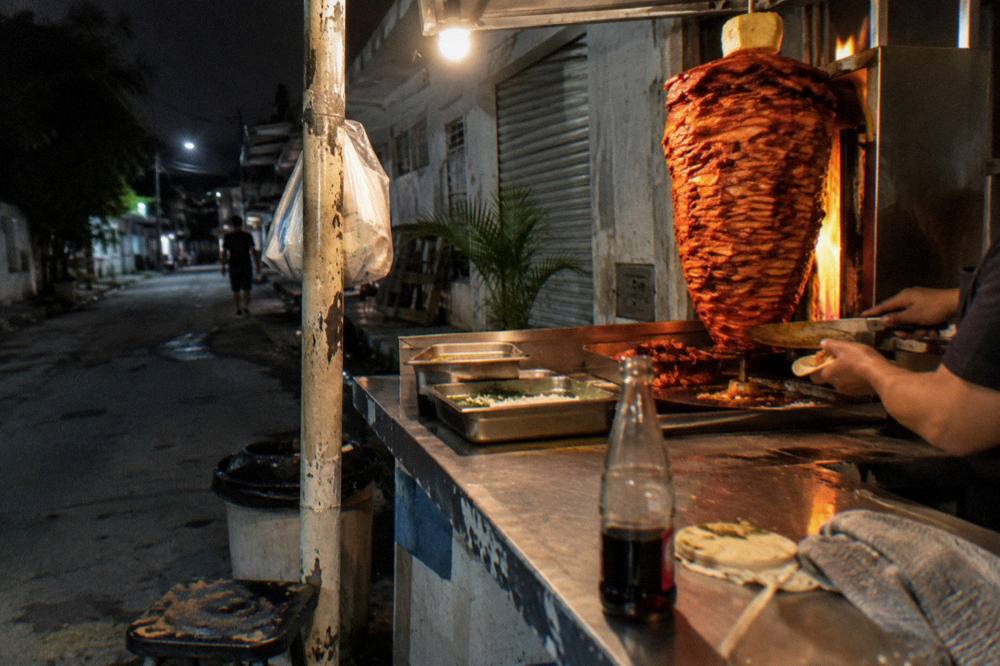
One useful outsider fact: al pastor, the trompo-shaved pork taco most visitors associate with Mexico, is not a Yucatecan dish. It belongs to the pan-Mexican street-food canon that travelled here with central Mexican cooks, and Playa del Carmen serves it very well alongside the regional dishes. Treating the two as different traditions, one Yucatecan and one national, makes the menu easier to navigate. If salsas and spirits both interest you, the Drinks and Appetizers Class, 2 hours from $68.00 per person, teaches cocktail and appetizer pairings with pickup included per the listing.
Where Should You Eat Each Dish In Playa Del Carmen?
The honest answer is that each district of Playa del Carmen has a different kitchen personality: Quinta Avenida and its side streets carry the walkable tourist mix, Centro and the streets around the Mercado Municipal carry the everyday local kitchens, and Constituyentes and inland areas such as Ejido carry the newer hidden-spot scene. Matching the dish to the district beats hunting any single restaurant, and the guided walks in town are organised along exactly these lines.
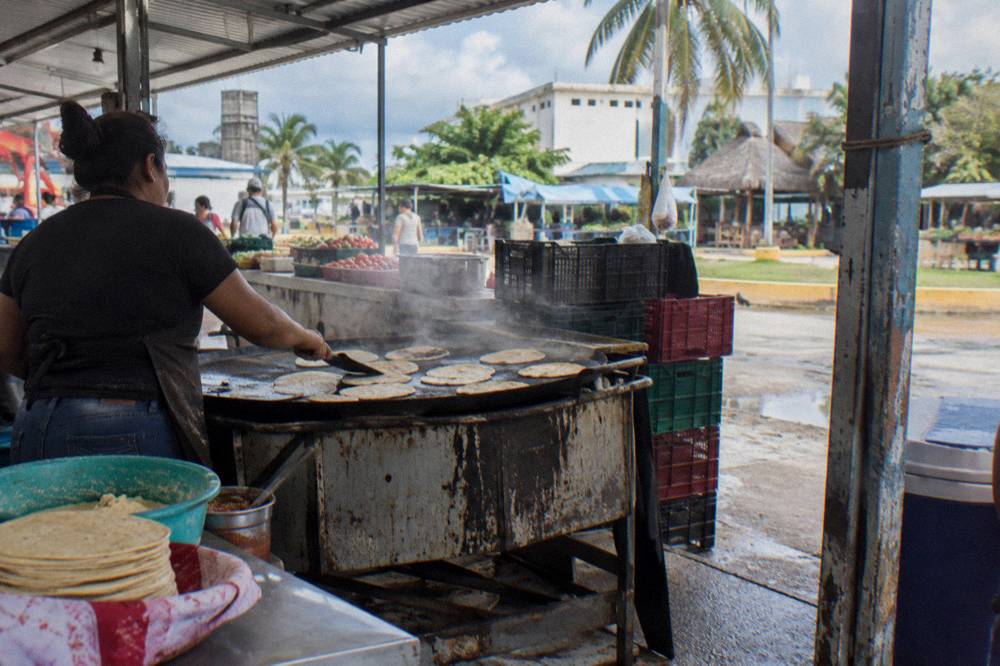
The Mercado Municipal on Avenida 25 is the classic everyday anchor for cochinita pibil, comidas corridas and market breakfasts; local food guides point to it as the most consistent daily source of regional tacos, without claiming any fixed price, since market prices move. Inland from Quinta Avenida, street taquerías serve the volume trade: quick, cheap and uninterested in décor.
Playacar, the residential resort zone south of town, plays a different role in this map: it is where the private-chef format lives, and several cooking and brunch experiences base themselves there because a house kitchen and a small group suit a leisurely pace. The Private Chef Gourmet Brunch runs about 3 hours from $142.47 with the price basis shown on the booking page, while the private chef-house tequila cooking experience runs about 4 hours from $269.00 on the same basis. Neither is a street-food substitute; both are the splurge version of the same regional repertoire. The distinction is covered in more depth on the private food tour guide.
| District | Kitchen personality | Dishes to hunt there |
|---|---|---|
| Quinta Avenida | Walkable, tourist-facing mix | Tasting-menu walks, marquesitas, upscale regional plates |
| Centro / Mercado Municipal | Everyday local kitchens | Cochinita pibil, sopa de lima, comidas corridas |
| Constituyentes | Newer hidden-spot scene | Small-plate crawls, chef-led tastings |
| Ejido and inland streets | Volume street food, local prices | Al pastor tacos, panuchos, late-night stands |
| Playacar | Residential, private-chef territory | Cooking experiences, brunch formats |
The district logic is also the logic of the tour scene. The Eating With Carmen Walking Tour works Quinta Avenida over roughly 3 hours, rated 4.9 across 1,369 reviews, from $77.51 with the price basis shown on the booking page, food and drinks included, capped at 24 guests. The 4-Hour Budget Food Crawl covers local bites and hidden spots in the Ejido area from $23.46 per person with a group max of 8, a new listing with no reviews yet; Check availability if the long, cheap, small-group format appeals. For planning the wider street-food picture, the street food tour guide breaks down the stand scene district by district.
Which Tours And Classes Teach These Dishes In Playa Del Carmen?
If eating the glossary is not enough and you want to cook it, Playa del Carmen has two strong formats: the market-and-kitchen cooking class and the guided dish walk. The most reviewed class is rated 5.0 across 333 reviews from $103.66 per person, the Yucatecan-themed class with bottomless drinks runs about 4 hours from $85.00, and the spirit-focused version adds tequila and mezcal tasting over 5 hours from $105.00 per person. And if the tequila and mezcal tasting leaves you curious about what locals actually order day to day, a guide to Mexico's most-loved drinks, from beer to aguas frescas explains each one and where to try them in Playa del Carmen.
A cooking class converts the glossary into muscle memory. You learn to press tortillas by hand, work a recado paste into meat, and judge when a panucho is stuffed correctly, which changes how you read every menu for the rest of the trip. The class decision is covered in depth on the cooking class guide, including how group sizes and menus compare. For dietary specifics, the Vegan Mexican Food Tour, rated 4.9 across 45 reviews from $83.52 per person, proves the regional repertoire adapts to plant-based eating without becoming an afterthought.
| Experience | Format | Length | Price |
|---|---|---|---|
| Juan More Taco Cooking Class | Cooking class, max 8 | ~3 hours | From $103.66 per person |
| 9 Recipes, Bottomless Drinks | Yucatecan class, max 4 | ~4 hours | From $85.00 per person |
| 5-Hour Class, Tequila and Mezcal | Cooking plus spirit tasting, max 14 | ~5 hours | From $105.00 per person |
| Rockstarcrawls Street Food Crawl | Guided walk, max 20 | ~3 hours | From $69.99 per person |
| Eating With Carmen Walking Tour | Guided walk, max 24 | ~3 hours | From $77.51 |
Class menus shift with the season and the instructor, so treat any dish list as indicative and confirm on the booking page. What stays constant is the format: a local kitchen, small groups, and recipes written down for you to take home. Between the walk and the class, most travellers find one of each fills a week without repetition.
How Do You Order These Dishes Like A Local In Playa Del Carmen?
Order like a local by ordering small and often: two or three tacos or one panucho at a time, salsa added at the table rather than in the kitchen, and the meal paced across stands. Breakfast is cochinita hour, markets serve comidas corridas at midday, and the trompo taquerías come alive after dark. The legal drinking age in Mexico is 18 with ID required.
Pacing is the skill. A local evening crawl moves from a soup or a plate at one kitchen to tacos at a second and something sweet to finish, and that structure is exactly what guided walks formalise. Portions at street prices are sized for it, and ordering everything at once is the classic visitor mistake that leaves no room for the marquesita stand. Mealtimes help too: cochinita is a morning dish by tradition, the sopa de lima lands well at lunch, and the fried snacks and al pastor corners peak between 8 p.m. and midnight.
Drinks follow the same small-and-often rhythm. A michelada or an agua fresca is the standard companion at a street stand rather than anything stronger, and chaya water is the local order that marks you as someone who reads past the first line of the menu. Because the legal drinking age is 18 in all Mexican states and identification is checked, keep a copy of your passport handy if you look young and want a beer with your tacos. None of this demands fluency; the vocabulary on this page is enough to hold your own at any counter in Centro.
Two practical notes finish the picture. First, dietary needs: never assume a stand or tour can handle an allergy, and message the operator before booking, since recados and broths carry layered ingredients that are not visible on the plate. Second, language: "uno de cochinita, por favor" and "sin cebolla" will carry you through almost any counter in town, and pointing at what the person ahead of you ordered is a fully accepted strategy. Mexican cuisine rewards this kind of direct engagement, because the kitchens that serve it are used to explaining rather than upselling.
Whichever way you assemble the evening, the guided versions of this glossary are one click away, and free cancellation is standard on most listings in town.
Common Questions About Mexican Dishes In Playa Del Carmen
What Is Cochinita Pibil?
A Yucatec Maya dish of pork marinated in sour citrus and achiote, wrapped in banana leaves and slow-roasted, traditionally in a pit. It is mild, tangy and shredded, served as tacos, on plates or in tortas.
What Is The Difference Between A Panucho And A Salbute?
A panucho is a tortilla slit and stuffed with refried black beans before frying; a salbute is fried plain and puffs up. Both are topped with shredded meat, lettuce and pickled onion.
Is Yucatecan Food Spicy?
The base dishes are mostly mild. The heat lives in the table salsas, especially habanero-based xnipec, which you add yourself in small amounts.
Is A Food Tour A Good Way To Try These Dishes?
Yes, because a guide translates the menu, paces the orders and moves you between kitchens. Options run from a 4-hour budget crawl at from $23.46 per person to the most reviewed walk, rated 4.9 across 1,369 reviews, from $77.51.
What Should I Eat For Dessert In Playa Del Carmen?
A marquesita: a rolled, crisp wafer filled with Edam cheese, sold from street carts. It is Yucatecan, salty-sweet and best eaten immediately.
Can Tours Handle Vegetarian Or Vegan Diets?
The Vegan Mexican Food Tour, rated 4.9 across 45 reviews from $83.52 per person, is built for it. For allergies, message any operator before booking rather than assuming accommodation.